Start smart with trade. This short guide helps small business owners and logistics teams understand key rules for moving goods across the country. The Ministry of International Trade and Industry (MITI) set up the National Single Window Business Process Reengineering Working Group in 2008 to speed up procedures and cut red tape.
Clear steps matter. At Port Klang, the trade industry defined 18 distinct process flows to handle import and export activities. That structure makes it easier to follow customs rules and meet document standards.
Malaysia’s exports hit RM75.6 billion in December 2016, showing how vital the sector is compared with hubs like Hong Kong. Whether you handle exporting, importing, or managing forms, this guide breaks down the process, common requirements, and the services that can help your product reach other countries smoothly.
Key Takeaways
- MITI’s 2008 initiative simplified trade through a single-window approach.
- Port Klang uses 18 work flows to standardize import and export activities.
- Strict customs and form requirements protect standards and ease clearance.
- Strong documentation helps businesses expand sales to other countries.
- Knowing the basic process saves time and reduces delays in the trade industry.
Understanding the Regulatory Framework for Import Export Compliance Malaysia
A clear regulatory framework keeps cross-border trade predictable and faster for small firms. Knowing which agencies set rules helps you plan logistics, costs, and documentation early.
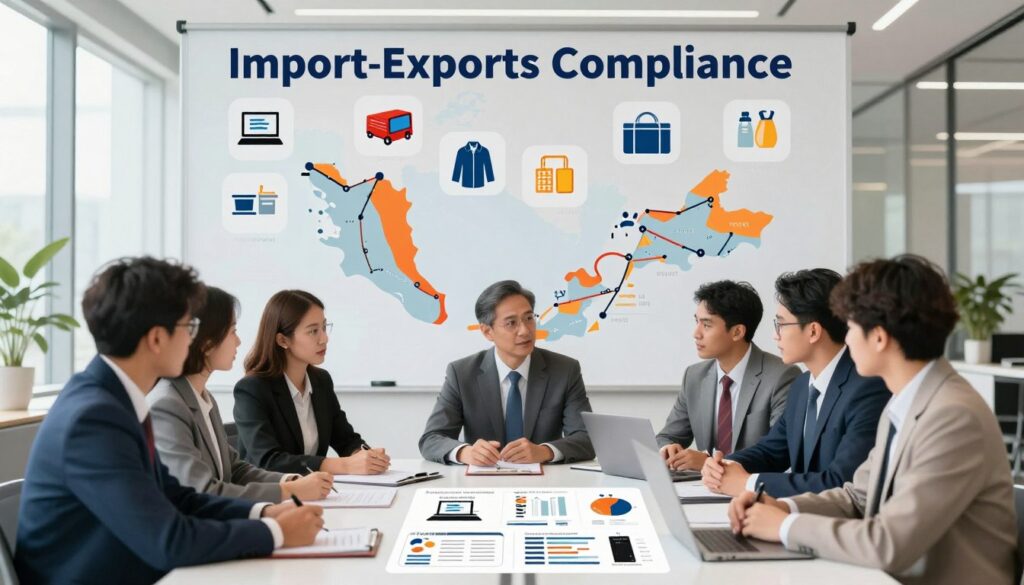
Role of MITI and RMCD
The ministry international trade works with the Royal Malaysian Customs Department (RMCD) to enforce the Customs Act 1967. RMCD handles clearance for imports, export and transit goods and sets customs procedures for each product type.
Businesses should track rules because import duties vary from 0% to 50% and are applied ad valorem. These duties and tariff rules affect pricing and margins.
Free Trade Agreements and Zones
Malaysia operates 13 Free Industrial Zones and 12 Free Commercial Zones for tariff-free raw material imports. Using these zones can reduce tariff costs and boost overall sales.
- Bilateral free trade deals with Australia, Japan, and Turkey expand market access and simplify paperwork.
- Palm oil and palm-based products stay important in exports and must meet strict standards and form requirements.
Essential Documentation and Customs Clearance Procedures
Accurate shipping documents are the backbone of smooth cross-border movement. Clear filings speed up checks and reduce unexpected fees.
Core documents include a Customs Export or Import Declaration, Commercial Invoice, Bill of Lading, Packing List, and a Certificate of Origin. These papers prove the origin and value of goods for duties and standards.
The 18 process flows used at Port Klang emphasize document preparation, customs clearance, technical control, and inland transport. Following each step avoids long delays seen in hubs like Hong Kong.
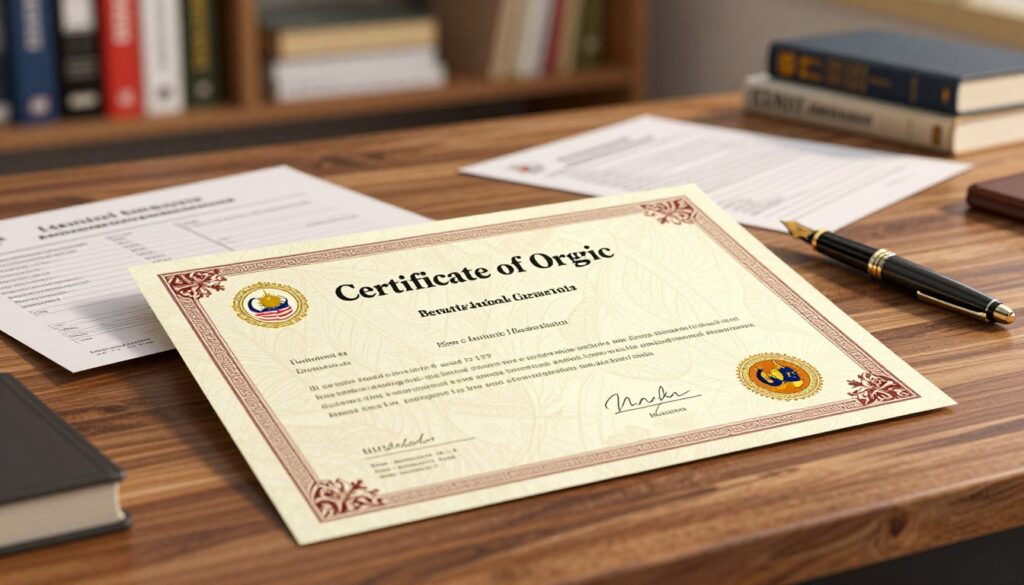
- Ensure the Bill of Lading and Certificate of Origin are correctly filed with malaysian customs.
- Keep invoices and packing lists ready to verify products and origin quickly.
- Use professional services to obtain a valid certificate of origin when needed.
| Document | Purpose | Filed With | Timing |
|---|---|---|---|
| Customs Declaration | Tax and duty assessment | malaysian customs | Before clearance |
| Commercial Invoice | Value and sale terms | Customs / Carrier | With shipment |
| Bill of Lading | Title and transport proof | Carrier / Customs | At dispatch |
| Certificate of Origin | Prove origin for duties | Chamber of Commerce | Before export/import |
Follow the correct process to protect your business, pay duties properly under the Customs Act 1967, and keep sales flowing to other countries.
Navigating Product Restrictions and Licensing Requirements
Knowing which goods need licences or permits saves time and prevents costly seizures at the border. Review official rules early so your team can meet each step in the trade process.
Regulated Goods and Licensing
The Custom Prohibition Act 1967 lists regulated items such as food, agricultural products, motor vehicles, and steel to protect national security.
Businesses should consult the ministry’s official list to confirm requirements before filing any export import paperwork.
Food and Agricultural Standards
The Department of Veterinary Services issues permits for livestock, meat, and related products. These licences ensure products meet strict halal and safety standards.
Follow testing and documentation rules to avoid delays and preserve public health when moving sensitive products.
Prohibited Items and Export Permits
Some items are banned outright. Turtle eggs, certain rattan from the Peninsula, and select animals cannot be shipped under any circumstances.
“Obtain correct permits for palm kernels, live animals, or heavy equipment to keep shipments moving.”
Unlike regulations in hong kong, malaysian customs require specific licences for heavy machinery, vehicles, and iron goods.
- Check the regulated-goods list before you trade.
- Secure permits early for palm or live-animal shipments.
- Use professional services to obtain sensitive licences and keep your business compliant.
Conclusion: Mastering Trade Compliance for Business Success
Knowing how customs rules affect your goods helps your business move faster and cut surprises. Follow clear steps, keep records tidy, and update your team with the latest information.
, Use the guide to plan shipments, whether you handle import or export of raw materials or finished products. Staying current on licences and paperwork gives you an edge in regional markets, including hong kong.
Need help? Professional services can streamline the process and protect your operations. Apply these practices daily to build a reliable trade routine and grow long-term sales.
FAQ
What is the role of the Ministry of International Trade and Industry (MITI) and the Royal Malaysian Customs Department (RMCD)?
MITI sets trade policy, negotiates free trade agreements, and issues guidelines for business activity. RMCD handles customs clearance, tariff classification, valuation, and collection of duties. Together they ensure goods move smoothly while meeting legal and safety standards.
How do free trade agreements and free zones benefit businesses?
Free trade agreements reduce or remove tariffs and simplify rules of origin for qualifying goods, lowering costs and improving market access. Free zones provide streamlined customs procedures, potential tax incentives, and faster logistics for manufacturers and distributors.
What key documents are needed for customs clearance?
Typical documents include the commercial invoice, packing list, bill of lading or airway bill, and a certificate of origin when preferential tariffs apply. Additional certificates may be required for regulated goods, such as sanitary or phytosanitary certificates.
When is a Certificate of Origin required and who issues it?
A Certificate of Origin is needed to claim preferential tariff treatment under a trade agreement. Chambers of Commerce and approved issuing agencies authenticate the certificate based on origin rules specific to each agreement.
What are the common licensing requirements for regulated products?
Controlled items like pharmaceuticals, chemicals, controlled electronics, and certain textiles often need import/export permits or product registration. Agencies such as the Ministry of Health or Department of Agriculture set those licensing rules and safety standards.
How are food and agricultural products regulated for safety and quality?
Food and agricultural goods must meet sanitary and phytosanitary standards, labeling rules, and residue limits. Inspections and certificates from the exporting country’s authority, plus local testing, may be required before clearance.
What items are typically prohibited or require special export permits?
Weapons, endangered species, certain chemicals, and restricted cultural artefacts are commonly banned or tightly controlled. Export permits and international certificates are mandatory for these items, and penalties for violations are strict.
How are duties and tariffs calculated on imported goods?
Duties are based on the tariff classification and customs value of the goods. Tariff schedules list rates for each product code, and customs applies valuation methods—often transaction value—to determine duties owed.
What are common customs clearance procedures to speed up release of goods?
Prepare accurate invoices and product descriptions, pre-file declarations where available, secure all necessary permits and certificates, and use licensed customs brokers. Early submission of documents reduces inspection delays.
How do businesses prove product origin to benefit from trade agreements?
Firms must maintain records showing where materials were sourced and where processing occurred. Proper documentation, supplier declarations, and certificate of origin issuance help prove eligibility under specific agreement rules.
What import/export records should companies retain for audits and verification?
Keep commercial invoices, bills of lading, customs declarations, permits, certificates of origin, supplier contracts, and testing reports. Regulators often require retention for several years to support compliance checks.
How can small businesses get help understanding trade regulations and procedures?
Seek guidance from trade associations, local chambers of commerce, licensed customs brokers, and government helpdesks. Training programs and advisory services offered by MITI and trade promotion agencies also help newcomers.
What penalties apply for failing to meet customs and trade requirements?
Penalties range from fines and seizure of goods to license suspension and criminal charges for serious breaches. Accurate documentation and proactive risk management minimize exposure to enforcement action.
How do sanitary and phytosanitary (SPS) measures affect cross-border shipments?
SPS measures protect human, animal, and plant health. They can require quarantine, testing, treatment, or certifications. Compliance with importing country requirements is essential to avoid rejections or destruction of shipments.
What is the bill of lading and why is it important?
The bill of lading is a transport document that acts as a receipt, title, and contract between shipper and carrier. It’s crucial for cargo release, customs clearance, and payment under trade finance instruments like letters of credit.
How do tariffs and non-tariff barriers impact market access?
Tariffs increase cost competitiveness while non-tariff measures—such as quotas, standards, and licensing—can restrict entry or add compliance costs. Understanding both helps businesses plan pricing and market strategies.