The Sales and Service Tax was reintroduced on 1 September 2018 under the Sales Tax Act 2018. The move replaced the previous GST system to simplify how tax is collected. The Royal Malaysian Customs Department now runs the entire system to fund national development and social programs.
Businesses must collect this single-stage consumption tax from customers and remit it to the customs department. Evaluating your annual turnover against government thresholds helps you decide if your business needs sst registration. Understanding the process avoids penalties and keeps operations smooth.
Knowing your obligations also helps with pricing, invoicing, and reporting. This short guide explains who must register, how the sales service tax works, and what to expect from the royal malaysian customs when you comply.
Key Takeaways
- The SST returned on 1 September 2018, replacing the old GST system.
- The Royal Malaysian Customs Department administers the tax system.
- Businesses collect the tax from consumers and remit it to the government.
- Compare your annual turnover with thresholds to determine if registration is needed.
- Proper compliance prevents legal issues and keeps your business efficient.
Understanding the Basics of SST
The sales and service tax framework separates charges on goods and services to make compliance clearer for businesses.
The Royal Malaysian Customs Department monitors the system to ensure broad compliance across the economy. Sales tax applies mainly to manufactured goods, while service tax targets specific services offered by businesses and service providers.
This structure works as a single-stage levy, so tax is charged once at manufacture or when a service is provided. The Ministry of Finance set a 6% rate when the framework launched on 1 September 2018.
- Sales tax covers goods produced or imported for sale.
- Service tax covers a defined list of services supplied domestically.
- The sales service tax system treats each component separately, so different rules and record-keeping apply.
Understanding these basics helps service providers and manufacturers determine specific obligations under the sales service tax framework and stay compliant with tax malaysia rules.
Determining Your Business Eligibility for SST Registration Malaysia
Eligibility hinges on the type of activity and your turnover over a 12-month period. Start by separating income from goods and income from services. That split tells you which rules apply.
Thresholds for Sales Tax
If your business is involved in the manufacturing of taxable goods, you must check the sales tax threshold. Manufacturers whose annual turnover of taxable goods exceeds RM 500,000 must register.
Thresholds for Service Tax
Service providers must monitor the value of taxable services supplied in any 12-month window. The standard threshold is RM 500,000. Certain sectors, like restaurants, have a higher threshold of RM 1,500,000 to protect smaller operators.
- Separate rules: sales tax and service tax requirements are independent, so you may need one or both.
- New categories: from July 2025, construction and private healthcare face RM 1,500,000 thresholds.
- Next step: compare your turnover to these limits to see if you must register for sst registration and comply with tax malaysia rules.
Distinguishing Between Sales Tax and Service Tax
How you classify a transaction—as a sale of goods or a service—determines which tax rules apply.
Sales tax targets taxable goods that are manufactured in or imported into the country. The Sales Tax Act 2018 sets the rules for these goods and the point of collection is usually at manufacturing.
The service tax applies to specific services supplied to consumers and is governed by the Service Tax Act 2018. This tax is generally charged at the point of consumption, when the service is provided.
- Sales tax is collected at the manufacturing stage for taxable goods.
- Service tax is collected when taxable services are supplied to customers.
- Unlike GST, the sales service tax framework is a single-stage levy on selected goods and services.
Why the distinction matters: businesses must treat sales and service separately for reporting and compliance. Accurate classification of taxable goods versus taxable services reduces errors and keeps tax malaysia filings clean.
Current SST Rates and Taxable Categories
Knowing the latest rates helps businesses price goods and services correctly.
Sales tax applies at two common rates: 5% for select items such as some construction materials, and a standard 10% for most taxable goods. Service tax generally sits at 8%, while a reduced 6% rate covers food and beverage, telecommunications, parking, and logistics services.
From July 2025, the taxable list expands to include over 4,800 items and services. This update brings in areas like leasing and private education for foreign students at a 5% rate.
New Categories and Updates
Government updates are periodic. Businesses must watch the effective date of each change to apply the correct rate. Missing an update can lead to incorrect pricing and reporting.
- Apply the right rate: match each sale or service to its taxable category before charging tax.
- Track dates: changes often have specified effective dates—mark them in your accounting system.
- Stay informed: service providers and manufacturers should review lists regularly to keep compliance current.
Exemptions and Zero-Rated Goods
Certain everyday items and key services are deliberately excluded from tax to protect household budgets.
Essential food items like rice, chicken, beef, vegetables, eggs and local fish remain exempt or zero-rated. This keeps prices stable for families across the country.
Other exempt goods include books, educational materials, medicines and basic building materials. These exemptions support education, health and housing affordability.
- New additions from 1 July 2025: select imported fruits such as apples, oranges and dates are now exempt following public feedback and review.
- Logistics services between businesses inside Free Commercial Zones are often outside the scope of service tax to support trade and movement of goods.
- Goods made for export generally escape sales tax to help local manufacturers stay competitive abroad.
Understanding these exemptions matters. Correctly classifying taxable goods and taxable services prevents errors in invoicing and reporting under the sales service tax framework. Keep clear records and consult your tax adviser when in doubt.
Preparing for the Online Registration Process
Before accessing the portal, ensure your business data and tax-related documents are organised.
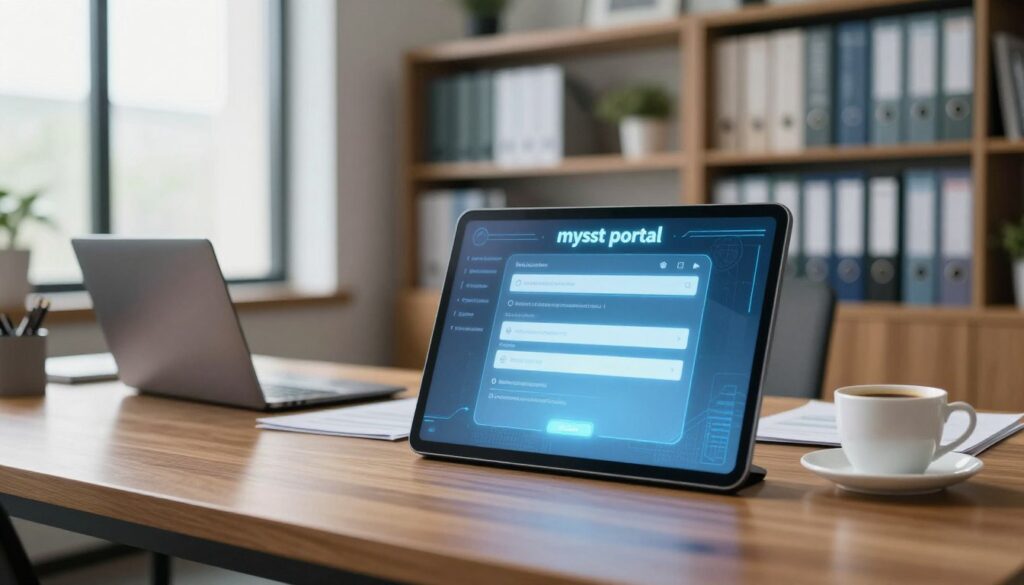
Use the MySST portal at www.mysst.customs.gov.my to start the online application. The royal malaysian customs verifies every submission before issuing an approval letter.
Required documentation
Have these items ready: company registration details, company bank statements, and clear information about your taxable goods or taxable services. Also prepare contact details and a brief description of manufacturing or service activities.
Pre-Registration Checklist
- Confirm annual turnover exceeds RM 500,000 so you must register for the tax.
- Scan business documents and bank statements for upload.
- List all sales and services that may be taxable over the period.
- Assign a contact person to manage the portal account and follow the rules.
| Document | Purpose | Notes |
|---|---|---|
| Company registration | Verify legal entity | Ensure name matches bank records |
| Bank statements | Prove turnover and cash flow | Provide latest 12 months |
| List of goods/services | Classify taxable items | Be specific about sales and service lines |
Tip: Completing this checklist before the registration process reduces delays and helps you register sales and service tax components smoothly through the portal.
Navigating the MySST Portal
Open the MySST portal and prepare to enter accurate business data for the form. Take a moment to gather your company ID, bank statements, and a list of taxable goods and services before you start.
Complete each field carefully. The portal verifies credentials and asks for clear descriptions of your sales and service activities. Accurate input speeds up the registration process and reduces follow-up queries from the customs department.
After you submit, the system generates an approval letter immediately. You will also receive an automatic confirmation email with the approval attached for your records.
- The portal assigns a unique registration number for issuing tax invoices and tracking compliance.
- It displays the effective date and the specific rules and responsibilities you must follow.
- Proper navigation helps your business meet royal malaysian customs requirements for taxable goods and taxable services.
Tip: Review the form once more before submission. Small mistakes can delay approval and affect the period when you must charge sales tax or service tax.
Managing Your Registration Number and Responsibilities
Getting your registration number starts a practical set of duties for every seller and service provider.
Charge and remit tax on time. After you receive the number, your business must collect the correct service tax and sales tax from customers and send payments by the deadlines.
Show the number on invoices. Display the registration number on all tax invoices to ensure transparency and meet legal rules for sales service tax compliance.
Keep clear records of all taxable goods and services. Accurate books make it easier to calculate tax owed and to respond to any audit or inquiry.
The MySST portal lets you update business details if your turnover or service mix changes. Use the portal to manage contacts and keep the registration process current.
- Collect tax at point of sale and remit on schedule.
- Include the registration number on every tax invoice.
- Maintain records for taxable goods and taxable services.
- Use the mysst portal to update information as operations evolve.
- Poor management can trigger audits or further inquiries, so follow the rules closely.
Understanding the Consequences of Non-Compliance
Ignoring filing deadlines and payment rules risks severe financial and legal consequences for any business. The customs department enforces compliance to protect the system and honest traders.

Financial Penalties
Monetary fines can be large. Non-compliance may lead to fines up to RM 50,000 for failures related to service tax or sales tax matters.
These penalties apply to both goods and services that are taxable under the sales service framework.
Legal Consequences
Enforcement can include criminal action. Serious breaches may result in imprisonment for up to three years, a fine, or both.
The Royal Malaysian Customs Department treats failure to file returns or make payments as an offense and can pursue prosecution.
Late Payment Surcharges
Interest and surcharges rise with delay. The structure starts at 10% for 1–30 days and can reach 40% after 90 days.
- 10% for 1–30 days
- 20% for 31–60 days
- 30% for 61–90 days
- 40% after 90 days
Quick tip: Use the portal to file on time, keep clear records, and review rates and rules regularly to avoid costly penalties and legal risk.
Grace Periods and Compliance Support
Until 31 December 2025, a penalty-free window helps businesses adjust to the updated rules.
This period aims to support firms coping with expanded categories and new thresholds after the 2025 updates. Use the time to check your books and confirm which sales or services are taxable under the current rate lists.
The MySST portal remains the go-to system for guidance and for completing any pending sst registration or updates. Submit accurate data so the malaysian customs can review and issue approval without delays.
Act now if you must register. Ensure turnover records are clear and your point-of-sale systems collect the correct tax. Doing this reduces the chance of future penalties once the grace period ends on the set date.
- Penalty-free period until 31 December 2025 for businesses making genuine efforts.
- Use the portal to confirm taxable items, thresholds, and the registration process.
- Finalize records and secure approval before the period closes to avoid future fines.
Conclusion
Knowing which goods and services are taxable protects your cash flow and reputation.
Follow the steps outlined here to keep your business compliant with current rules. The shift from the old GST to the new system aims to balance revenue needs and everyday costs.
Complete your online registration, track turnover, and classify sales accurately. Staying current with sst malaysia lists reduces the chance of costly penalties and reporting errors.
If the process feels complex, seek professional help so filings are correct and timely. Good tax practices free you to focus on growth while avoiding fines and other penalties.
FAQ
Does my business need to register for the sales and service tax?
If your annual taxable turnover from goods or services exceeds the prescribed threshold, you must enroll with the Royal Malaysian Customs. Businesses that manufacture taxable goods or provide taxable services must check thresholds, rates, and the list of taxable activities to determine if a sign-up is mandatory. Turnover from related companies and certain exempt supplies may affect the calculation.
What are the basic differences between sales tax and service tax?
Sales tax applies to the manufacture or import of taxable goods, charged at specific rates at the point of sale or import. Service tax targets specific taxable services supplied in the country, such as hospitality, telecommunications, and professional services. Each has distinct filing rules, accounting treatments, and taxable categories managed by the customs department.
What is the turnover threshold for sales tax?
The threshold for manufacturers depends on production and annual turnover criteria defined by the tax authority. Small-scale manufacturers below that limit may be exempt, while those above must comply and apply for a business tax ID. Check the latest threshold figures on the government portal before applying.
What is the threshold for service tax for service providers?
Service providers whose taxable services generate revenue above the specified annual threshold must register. This includes hotels, restaurants, consultants, and other listed providers. Aggregated turnover across related entities may be considered when determining liability.
Which current rates apply and what categories are taxable?
Rates vary by product type and service category; some goods face a flat percentage, while certain services carry a separate rate. The customs guidelines list taxable goods, prescribed services, and any special rates for sectors like manufacturing and hospitality. Check the portal for updates and applicable tariffs.
Have there been recent category updates or newly taxable items?
Yes. The tax authority periodically amends the schedule to add or remove taxable goods and services. Recent updates typically cover digital services, specific manufacturing inputs, and new consumer goods. Businesses should review official gazettes and the online portal for the latest notices.
What exemptions and zero-rated goods exist?
Exemptions include certain medical supplies, basic food items, and raw materials for manufacturing in some cases. Zero-rated goods are taxable supplies charged at 0% and allow input tax recovery where relevant. Exemptions and zero-rating rules are precise—consult the official lists to confirm eligibility.
What documents are needed to complete the online sign-up process?
Prepare company registration documents, business profile, financial statements, identification of directors, and details of taxable activities. Importers and manufacturers should include customs documentation and product classifications. Having accurate turnover figures and bank details speeds approval.
What should I check before starting the pre-application checklist?
Verify your business activity codes, determine aggregated turnover, confirm the taxable nature of your goods or services, and ensure supporting documents are current. Assign a responsible officer for filings and recordkeeping to avoid delays in account creation on the portal.
How do I navigate the MySST online portal?
Use the official portal to create an account, submit your application, upload documents, and view correspondence from the customs department. The system guides you through forms and lets you track application status, file returns, and make payments online. Keep login credentials secure and update contact details promptly.
What responsibilities come with a registration number once approved?
After approval, the registration number must appear on invoices and customs paperwork where required. Registrants must file periodic returns, collect and remit tax, maintain records, and issue compliant invoices. Changes in business details, cessation of activities, or transfers must be reported to the authority.
What financial penalties apply for non-compliance?
Penalties include fines for failing to enroll when required, incorrect filings, and under-declaration of taxable turnover. Penalty amounts depend on the severity and whether the breach is repeated. Interest and additional assessments can increase liabilities significantly.
What legal consequences could a business face for evasion or fraud?
Deliberate evasion or falsifying documents can trigger prosecution, heavier fines, and possible imprisonment for responsible individuals. Legal action can also lead to business disruption, seizure of goods, and reputational damage. Legal counsel is advised if you face enforcement action.
Are there late payment surcharges for overdue remittances?
Yes. Late submissions or late tax payments attract surcharges and interest calculated from the due date. These add to the principal liability and can affect future compliance records. Paying on time avoids extra costs and keeps your account in good standing.
Is there a grace period for new registrants to comply after approval?
New registrants may receive guidance on filing cycles and initial deadlines, but obligations generally start from the effective date of approval or the date the turnover threshold was met. Check official communications for any transitional provisions or temporary relief measures.
Where can I get compliance support if I’m unsure about obligations?
Seek guidance from the Royal Malaysian Customs Service helpdesk, accredited tax agents, or qualified accountants familiar with local tax law. Many chambers of commerce and industry bodies also run seminars and advisory services to help businesses meet their filing and payment duties.