
We lay out the official five‑phase rollout so businesses know exactly when to adopt the new system and how the grace periods work. The schedule uses FY2022 audited financials or YA2022 tax returns (with proration where relevant) to assign your phase by annual revenue.
Phase 1 for those above RM100m starts on august 2024, and the sequence continues through a phased start in july 2026. Each phase includes a six‑month relaxation window that lets companies consolidate invoices and adjust descriptions before full enforcement.
We highlight practical updates: businesses under RM500,000 turnover remain exempt for now, and penalties under Section 120 of the Income Tax Act 1967 apply if firms fail to comply after the grace period. You will see clear steps to map your phase and choose transmission options, from IRBM’s MyInvois Portal to API integration, so you can act with confidence.
Key Takeaways
- Five-phase rollout tied to FY2022/YA2022 revenue determines your e-invoice implementation date.
- Start dates run from august 2024 to july 2026, each with a six‑month relaxation window.
- Businesses under RM500,000 annual turnover are currently exempt.
- Post-grace rules tighten; penalties under tax law may apply for noncompliance.
- Transmission options include the free MyInvois Portal or API for higher volumes.
- We help companies understand compliance steps and risk mitigation you need know now.
IRBM’s latest updates: What changed in the e-invoicing rollout and why it matters to businesses
The inland revenue has confirmed a revised five‑phase rollout with six‑month relaxation windows for each group. We note that the early phases remain unchanged and smaller taxpayers see extended breathing space.
Revenue Board Malaysia now schedules firms with RM500k–RM1m turnover into the final phase starting 1 July 2026, while those below RM500k stay exempt for now. The relaxation window permits consolidated e-invoices and flexible descriptions, provided core data is captured.
- What this means: six months without penalties under Section 120 if basic requirements are met.
- Practical effect: more time to sequence people, process, and technology changes.
- Action for businesses: plan procurement, controls, and staff training around the timeline.
| Business size | Start | Key relief |
|---|---|---|
| Over RM100m | Aug 2024 | Six‑month consolidation |
| RM500k–RM1m | Jul 2026 | Final phased entry |
| Under RM500k | Exempt (current) | Monitor further guidance |
Malaysia’s five-phase e-invoice timeline by annual turnover
This section lays out each phase by turnover band and the six‑month relaxation each company can expect. We map phases to help you identify the mandatory start and interim leniency.
Phase 1: Over RM100 million
Mandatory from 1 August 2024 with a relaxation window until 31 January 2025. Large businesses should prioritise load testing and vendor coordination.
Phase 2: RM25 million–RM100 million
Starts 1 January 2025; consolidation allowed through 30 June 2025. Use this period to finalise controls and pilot transmissions.
Phase 3: RM5 million–RM25 million
Begins 1 July 2025 with relief to 31 December 2025. Early sandbox testing reduces risk once full validation is required.
Phase 4: RM1 million–RM5 million
Active 1 January 2026 to 30 June 2026. Plan cost‑effective tools that can scale as turnover grows.
Phase 5: Up to RM1 million
Starts 1 July 2026 with a window to 31 December 2026. Note: taxpayers below RM500,000 remain exempt for now.
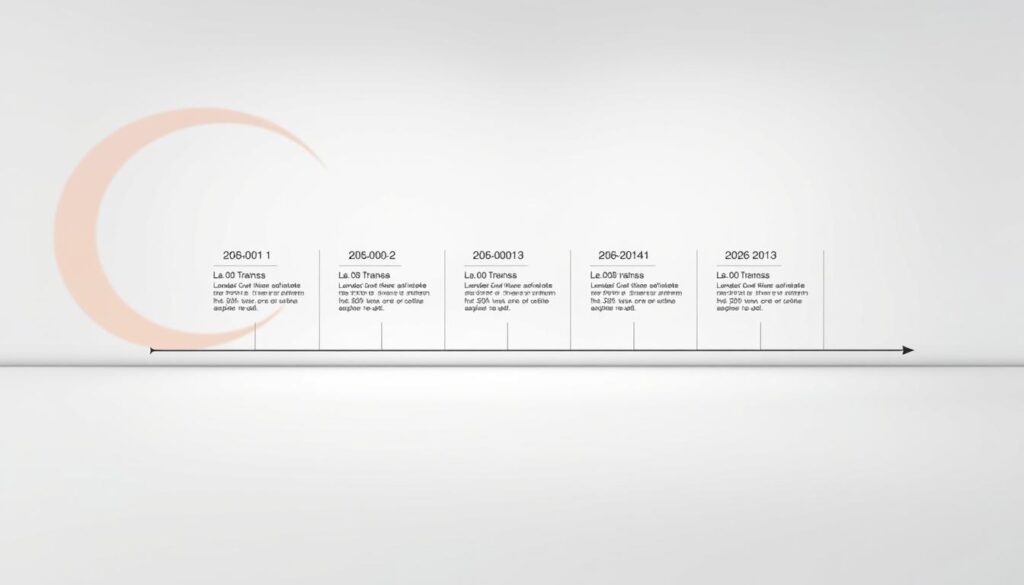
- Practical note: consolidated e-invoices are allowed during each six‑month window.
- Important change: from 1 January 2026 consolidated invoices over RM10,000 are not allowed and B2B validation becomes compulsory.
- Action: we recommend larger companies finish stress tests early; smaller businesses pick right‑sized tools to scale with turnover revenue.
e-invoice implementation date: how your company’s start date is determined
We determine your rollout phase from FY2022 audited figures or YA2022 tax returns. If your FY2022 year‑end changed, the inland revenue board will prorate turnover to a 12‑month equivalent.
What the Revenue Board Malaysia uses
- FY2022 audited annual turnover or YA2022 annual revenue is the primary basis.
- Proration applies where FY2022 did not cover 12 months to produce comparable turnover revenue.
- Phased notifications will be sent to mandated companies so you know your official start date.
Exemptions and special notes
If your businesses annual revenue is below RM500,000, you are currently exempt from mandatory adoption. New companies commencing from 2023 have an indicative 1 January 2027 target, pending further guidance.
We recommend you reconcile revenue, turnover and tax filings now. Document the basis of your phase determination for audit readiness and coordinate with your accountant on group restructures or partial‑year operations.
Grace and relaxation period: what you can do between your start date and full enforcement
We outline practical actions your team can take during the six-month relief window. The grace period gives companies room to stabilise processes, train staff, and reconcile records without immediate penalties.
Consolidated e-invoices and flexible descriptions during the six-month window
During the relaxation period, monthly consolidated e-invoices may be used for both B2B and B2C to ease operational load.
Keep descriptions clear but concise. Capture the minimum required fields so records remain auditable when full enforcement starts.
What changes after the relaxation period ends
- Separate validation: B2B transactions must be validated individually after the window closes.
- Threshold rule: From 1 January 2026, consolidated invoices are not allowed for transactions over RM10,000.
- Operational tips: migrate high-value flows early, set cutover criteria, and document cancellation/rejection handling within IRBM’s 72-hour window.
Phase-specific compliance requirements and penalties to know
We outline the actions you must take as each relaxation period ends. Companies must prepare for stricter validation, schema checks, and clear audit trails.
B2B validation vs. B2C consolidation and schema compliance with IRBM
After the relief window, B2B transactions require individual validation. B2C may remain consolidated under current guidance.
Schema requirements follow IRBM formats (XML/JSON aligned to UBL 2.1). There are 55 fields with 37 mandatory fields your system must support.
System readiness: data validation, stress testing, automated workflows
We recommend data validation routines and stress testing to avoid rejection spikes. Configure automated workflows for monitoring, resubmission, and exception handling.
Set a clear end-of-relaxation checklist so teams enforce the requirements and reduce manual fixes.
Non-compliance penalties under Section 120 of the Income Tax Act 1967
“Failure to issue required records is an offence under Section 120(1)(d) ITA 1967.”
Penalties range from RM200 to RM20,000 per instance and may include up to six months’ imprisonment. IRBM validation issues a UIN and QR code; supplier and buyer get notifications.
| Area | Key action | Consequence |
|---|---|---|
| B2B validation | Individual transmission and UIN check | Rejection risk if schema errors |
| Schema compliance | Support XML/JSON UBL 2.1, 37 mandatory fields | Failed validation, resubmit within 72 hours |
| Controls | Automated workflows and audit logs | Lower penalty exposure |
- Tip: log rejection reasons and use the 72-hour cancel/reject window to correct records.
- Tip: align your tax and IT teams early to meet compliance requirements and avoid fines.
Readiness and integration: choosing MyInvois Portal or API and planning your transition
Deciding between the MyInvois Portal and API integration determines your technical and operational path. We guide you to match the transmission method to volume, skills, and cost.
Transmission options: free MyInvois Portal vs API-based integration
MyInvois Portal suits low-to-moderate volumes and keeps software overhead low. It works for many small businesses during the grace period.
API integration is ideal for high volumes. It automates submission, returns UINs and QR codes, and reduces manual work once your system is ready.
Readiness checklist: people, process, technology, and pilot testing
- People: assign governance, train staff, document controls.
- Process: standardize master data and issuance flows to meet IRBM requirements.
- Technology: map fields, test SDKs, and enable monitoring for real-time validation.
“Pilot high-volume lanes first to stabilise mappings and exception handling.”
| Choice | Best for | Key advantage |
|---|---|---|
| MyInvois Portal | MSMEs, manual teams | Low-cost, quick start |
| API integration | Large enterprises | Automated, scalable |
| Hybrid | Growing businesses | Trial portal, then switch to API |
SME tip: use the relaxation window to pilot both routes, stabilise mappings, and protect revenue by avoiding last-minute rework.
Key dates to mark: August 2024, January 2025, July 2025, January 2026, July 2026
Mark these fixed milestones on your calendar so teams can sequence work, avoid last‑minute changes, and keep suppliers aligned.
Critical timeline entries to record:
- Phase 1: 1 Aug 2024 — relaxation to 31 Jan 2025.
- Phase 2: 1 Jan 2025 — relaxation to 30 Jun 2025.
- Phase 3: 1 Jul 2025 — relaxation to 31 Dec 2025.
- Phase 4: 1 Jan 2026 — relaxation to 30 Jun 2026. From this time, consolidated invoices over RM10,000 are not permitted.
- Phase 5: 1 Jul 2026 — relaxation to 31 Dec 2026; businesses under RM500,000 remain exempt.
Practical actions: schedule checkpoints 60–90 days before each milestone, align peak financial cycles with test windows, and share the calendar with finance, IT and operations.
We recommend SMEs use the july 2026 phase as the last practical test window and document lessons from pilots to speed later rollouts.
| Milestone | Start | Relaxation end |
|---|---|---|
| Phase 1 | 1 Aug 2024 | 31 Jan 2025 |
| Phase 3 | 1 Jul 2025 | 31 Dec 2025 |
| Phase 5 | 1 Jul 2026 | 31 Dec 2026 |
Conclusion
Below we summarise practical steps to secure compliance and protect revenue during the rollout.
We recap the five phases and the key implementation anchors so your leadership can finalise program timelines with confidence. Use FY2022 audited figures or YA2022 revenue to map your phase and check any prorated annual turnover calculations with your accountant.
The six‑month relaxation period gives time to consolidate invoices and train teams. Remember: after the grace period B2B validation is mandatory and from 1 January 2026 consolidated invoices over RM10,000 are no longer allowed.
Action now: assign owners, confirm systems, rehearse cutovers, and lock supplier and buyer communications well before the end of your window. Document guidance from the revenue board malaysia and keep tax and transaction controls tight to reduce Section 120 risk.
FAQ
What is the full rollout timeline for Malaysia’s e-invoicing program?
The national rollout follows a five-phase schedule by annual turnover. Large taxpayers over RM100 million begin on August 1, 2024, with subsequent phases staggered through July 1, 2026. Each phase includes a six-month relaxation window before full enforcement.
What recent updates did the Inland Revenue Board of Malaysia (IRBM) announce and why do they matter?
IRBM clarified phase start months, relaxation periods, and validation rules to give businesses time to adjust systems and processes. These updates affect compliance timing, data requirements, and whether you use the government portal or an API integration.
How is the five-phase schedule divided by annual turnover?
The phases are: over RM100 million (starts August 1, 2024, relaxation until January 31, 2025); RM25–RM100 million (starts January 1, 2025, relaxation until June 30, 2025); RM5–RM25 million (starts July 1, 2025, relaxation until December 31, 2025); RM1–RM5 million (starts January 1, 2026, relaxation until June 30, 2026); up to RM1 million (starts July 1, 2026, relaxation until December 31, 2026).
How does IRBM determine my company’s start month?
Your start month is based on your FY2022 audited turnover or your YA2022 tax return. IRBM allows proration where applicable, so use the declared annual revenue to map to the relevant phase.
Are any businesses exempt from the scheme?
Entities with annual revenue below RM500,000 currently remain exempt. New businesses established from 2023 have specific rules and may be assessed differently; consult your tax advisor to confirm status.
What can we do during the six-month relaxation period?
During the grace window you may transmit consolidated invoices for B2C sales and use flexible descriptions. This period lets you finalize software integration, run pilot transmissions, and train staff before validation rules tighten.
What changes once the relaxation window ends?
After the window closes, IRBM requires stricter B2B validation, disallows large consolidated invoices over RM10,000, and enforces full schema compliance. Prepare for detailed data matching and mandatory field checks.
What are the main compliance requirements and penalties?
Businesses must meet schema standards, perform data validation, and follow transmission rules for B2B and B2C flows. Non-compliance can trigger penalties under Section 120 of the Income Tax Act 1967, so timely adherence is crucial.
Should we use the MyInvois Portal or integrate via API?
Both options work: the MyInvois Portal is a free web-based entry point suited to small firms, while API integration supports automated workflows for larger companies. Choose based on transaction volume, IT capability, and long-term automation goals.
What does a readiness checklist look like?
Focus on four areas: people (roles and training), process (invoice flows and controls), technology (software, validations, security), and pilot testing (stress tests, end-to-end trials). Complete each item well before your phase start.
How can SMEs use the relaxation period to avoid last-minute problems?
SMEs should prioritise selecting compatible software, pilot a subset of invoices through the portal, document new invoice fields, and train staff. Early pilots reveal mapping issues and reduce disruption at full enforcement.
What are the key calendar dates businesses should mark?
Important months are August 2024, January 2025, July 2025, January 2026, and July 2026 — each corresponds to phase starts that relate to turnover thresholds and associated grace periods.