
Starting 1 July 2025, Tenaga Nasional Berhad bills in Peninsular Malaysia move to a clear, itemized model under Regulatory Period 4 (RP4). The energy commission frames RP4 to improve transparency and stability while adapting to market signals.
The new structure replaces tiered blocks with separate components: Energy, Automatic Fuel Adjustment (AFA), Capacity, Network, and Retail. AFA will be reviewed monthly and capped unless Cabinet approves a higher rate.
Domestic users can opt into a Time-of-Use (ToU) plan with defined weekday and weekend windows. Incentives include a Retail Charge waiver for ≤600 kWh/month, energy efficiency rebates for ≤1000 kWh/month, and an RM40 e‑Kasih rebate for eligible households.
We explain how these changes affect budgeting, what to watch on your bill, and practical steps to manage price exposure under the new electricity billing system. This section sets expectations for customers and previews tactical moves—like considering ToU and tracking AFA—to protect your costs.
Key Takeaways
- RP4 begins on july 2025 and runs to December 31, 2027, introducing an itemized billing model.
- The new structure lists Energy, AFA, Capacity, Network, and Retail so you see price drivers clearly.
- AFA is reviewed monthly and capped, helping users anticipate short-term changes.
- Domestic customers may choose ToU plans; incentives reduce bills for lower usage bands.
- We advise tracking AFA and aligning usage to control your overall rate exposure.
What’s changing from July 2025: new tariff structure, monthly AFA, and Time‑of‑Use options
From July 1, 2025, the system moves to monthly automatic fuel adjustment updates so bills track current fuel prices and exchange rates more closely.
The key shift is replacing the biannual ICPT with a monthly AFA review capped at 3 sen/kWh per month unless Cabinet approves higher. The energy commission will publish monthly changes so you can anticipate effects.
Domestic users may opt for Time‑of‑Use. Weekday peak is 2:00 pm–10:00 pm and off‑peak hours are 10:00 pm–2:00 pm. Weekends are off‑peak all day.
| Window | Rate ≤1500 kWh (sen/kWh) | Rate >1500 kWh (sen/kWh) |
|---|---|---|
| Off‑peak | 24.43 | 34.43 |
| Peak | 28.52 | 38.52 |
To enroll you need a Smart Meter, CT meter, or RMR meter and to register at Kedai Tenaga. We recommend tracking high‑power tasks and shifting them to off‑peak to lower your bill without reducing total usage.
- Monthly AFA appears as a separate per‑kWh line so you can see fuel impact.
- Keep a simple usage log to spot savings opportunities outside 2–10 pm.
Inside the new tariff structure: energy, capacity, network, retail, and Automatic Fuel Adjustment
We now see each bill split into clear line items so you can trace what drives every sen you pay.
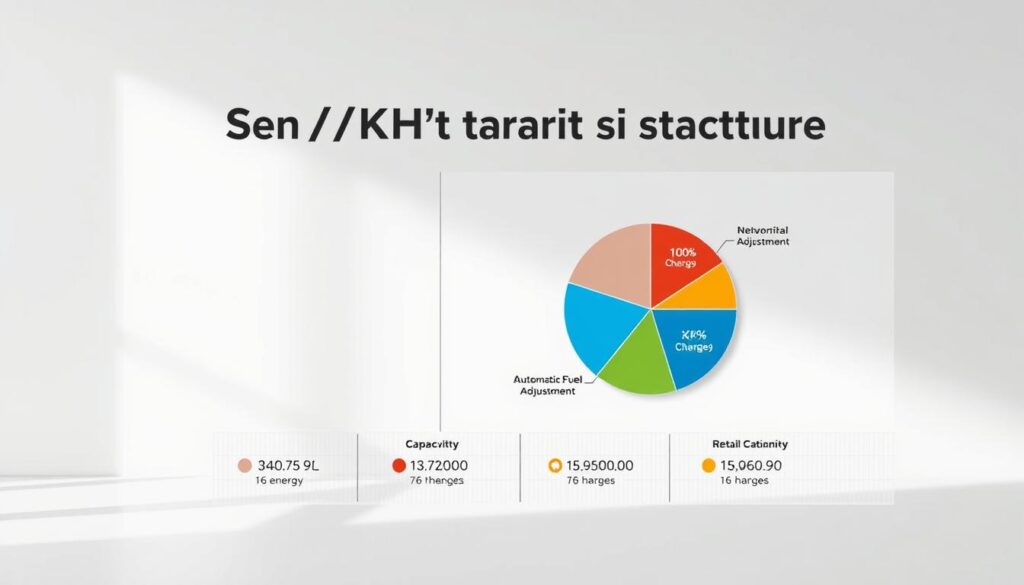
From tiered blocks to itemized costs: how charges now appear on your bill
The bill lists five lines: Energy (sen kwh), AFA (sen kwh), Capacity, Network and Retail. Capacity is fixed at 4.55 sen per kwh and network is 12.85 sen per kwh. Retail is a fixed RM10 per month.
Base rates and components
Energy base rates are 27.03 sen/kwh up to 1500 kwh and 37.03 sen/kwh above. Together with capacity and network, the blended charge for ≤1500 kwh averages about 44.5 sen per kwh before AFA and rebates.
AFA vs ICPT and RP4 timeline
AFA replaces the old ICPT and is reviewed monthly. The adjustment links to fuel and FX and is capped at 3 sen/kwh per month unless Cabinet allows more. RP4 runs from 1 July 2025 to 31 December 2027 and the energy commission will publish monthly AFA updates.
How to plan
Use the forthcoming bill calculator to model low, base and high AFA scenarios. Track your kwh patterns so you can estimate final costs and decide whether ToU or other steps will lower your monthly outlay.
malaysia electricity tariff impacts on households: bills, off‑peak hours, and savings opportunities
Many families can lower monthly costs by shifting high‑use tasks to off‑peak windows. We segment likely outcomes so you can plan practical steps.
Who pays less, the same, or more: usage bands ≤1000 kwh and up to 1500 kwh per month
About 85% of households using ≤1000 kwh per month should see similar or lower bills under the new tariff.
Households between 1000 kwh and 1500 kwh should evaluate Time‑of‑Use options and incentives to capture extra savings.
Time‑of‑Use (ToU) windows and rates
Weekday peak runs 2:00 pm–10:00 pm. Off‑peak hours are 10:00 pm–2:00 pm and all weekend is off‑peak.
| Window | Rate ≤1500 kwh (sen/kwh) | Rate >1500 kwh (sen/kwh) |
|---|---|---|
| Off‑peak | 24.43 | 34.43 |
| Peak | 28.52 | 38.52 |
Incentives and rebates
The Energy Efficiency Incentive offers up to 25 sen/kwh for users ≤1000 kwh. The RM10 retail charge is waived for customers using ≤600 kwh per month.
Eligible households may receive an RM40 monthly e‑Kasih rebate to offset costs.
- Shift appliances like water heaters, EV charging, and laundry to off‑peak for measurable savings.
- Track weekly usage to spot when peak consumption spikes and adjust schedules.
- Remember that AFA still moves with fuel prices, so reducing peak demand lowers exposure to price swings.
Conclusion
We recommend strong, practical steps to manage the new itemized billing that starts in July 2025. The system separates energy, capacity, network and retail charges and adds a visible automatic fuel adjustment line per month. The energy commission will publish AFA updates so you can track movements tied to fuel prices and FX.
Keep a simple kwh tracker and run month-end comparisons. Shift high-power tasks to off-peak hours under ToU to capture savings. Model scenarios for higher AFA months and confirm incentives—energy efficiency rebates and the retail waiver—are applied.
By monitoring usage and aligning routines with the new structure, you control costs and reduce exposure to imbalance cost shifts while staying informed and prepared.
FAQ
What is the new rate structure effective July 2025?
The new structure breaks charges into itemized components: energy, capacity, network, and a fixed retail charge. Typical base energy rates are shown at 27.03 sen/kWh or 37.03 sen/kWh depending on component allocation, capacity around 4.55 sen/kWh, network roughly 12.85 sen/kWh, plus a monthly retail fee of RM10. These figures form the baseline before the Automatic Fuel Adjustment and any taxes or rebates.
How does the Automatic Fuel Adjustment (AFA) work compared with the previous ICPT?
AFA replaces periodic ICPT interventions with a monthly fuel review tied to actual fuel and foreign exchange costs. Adjustments can add or subtract up to about 3 sen/kWh per month based on fuel price movements. The Energy Commission and the utility publish the monthly AFA figure so consumers see the direct link between fuel costs and their per‑kWh charge.
What is the Regulatory Period 4 (RP4) and what will be published during it?
RP4 runs from July 2025 to December 2027. During this period the Energy Commission and Tenaga Nasional Berhad will publish the base component rates, monthly AFA updates, performance targets, and regulatory guidance on billing formats and consumer protections. This gives stakeholders a clear framework for cost recovery and service standards.
How will my monthly bill be shown under the new format?
Bills will list itemized charges instead of a single blended rate. Expect separate lines for energy (sen/kWh), capacity (sen/kWh), network (sen/kWh), the RM10 retail fee, and a line for the monthly AFA. Taxes, rebates, and any targeted discounts will appear as separate entries so you can trace how each element affects your total.
Who is likely to pay more or less under the new regime?
Households with lower consumption—typically below about 1,000 kWh per month—may see stable or lower bills if they shift use to off‑peak windows and tap into incentives. High users up to around 1,500 kWh can face higher average rates because capacity and network charges make up a larger share of each kWh. The overall effect depends on your load profile and how often AFA increases fuel costs.
What are the Time‑of‑Use (ToU) windows and how can I save?
The main weekday peak window runs roughly 2:00 pm to 10:00 pm. Off‑peak periods include overnight hours and all weekend time. Shifting discretionary consumption—laundry, EV charging, pool pumps—to off‑peak can reduce your effective per‑kWh cost under ToU pricing. Evaluate appliance schedules and consider simple timers or smart plugs to capture savings.
What incentives and rebates are available to reduce bills?
There are targeted measures such as an Energy Efficiency Incentive, a partial retail charge waiver for the first 600 kWh for eligible customers, and welfare support like RM40 e‑Kasih for qualifying low‑income households. These reduce billed amounts or offset part of the fixed charge, improving affordability for eligible consumers.
How is the average bill calculated up to 1,500 kWh under the new system?
On average, itemized components combine to roughly 44.5 sen/kWh before adding the monthly AFA, taxes, or rebates for consumption near 1,500 kWh. That figure aggregates base energy, capacity, and network charges divided across consumption; actual bills will vary by exact kWh, AFA in that month, and any applied rebates.
How frequently will fuel‑related adjustments be applied?
Adjustments under the AFA are applied monthly. The utility calculates the change based on recent fuel price movements and foreign exchange fluctuations, then publishes the sen/kWh adjustment that will appear on the next billing cycle.
Where can I find official updates and detailed rate tables?
The Energy Commission and the national utility publish official rate tables, monthly AFA notices, and regulatory documents on their websites. We recommend checking those sources each month for the latest published AFA figure and any notices about changes to billing formats or incentive programs.