We guide you through identifying the correct HS entry so your imports and exports clear customs without delays. This brief how‑to explains the local system and the steps you need to verify classifications with confidence.
Malaysia uses the Harmonised System maintained by the Royal Malaysian Customs Department. Accurate classification underpins correct duty calculation, smooth clearance, and compliant shipping data.
In this guide you will learn how the AHTN 8‑digit structure fits the global 6‑digit HS. We show practical examples and how to use the JKDM HS Explorer (PDK 2022) to search, confirm results, and view preferential rates under FTAs like ATIGA.
Key Takeaways
- Accurate classification reduces holds and avoids extra costs during customs processing.
- Use JKDM’s HS Explorer to search and confirm outcomes before you book freight.
- Match supplier paperwork and maintain consistent codes across shipments.
- FTAs such as ATIGA may give preferential duty rates—check eligibility early.
- Simple audit trails and clear product descriptions lower misclassification risk.
Why getting HS codes right matters for Malaysian import export today
Accurate classification determines the duties and taxes applied to every consignment. It also flags any import or export restrictions that may apply under JKDM procedures.
When the wrong classification is used, customs may hold a shipment for verification. Holds trigger storage fees, missed delivery windows, and frustrated customers.
Errors create two financial risks: overpayment and underpayment. Overpayment drains margin. Underpayment invites back‑assessments, fines, or seizure.
- Predictable clearance: Correct entries reduce inspections and documentation queries.
- Cash‑flow protection: The right entry ensures only applicable duties and taxes are remitted.
- Operational stability: Accurate records improve on‑time delivery and lower exception handling for growing businesses.
We treat classification as a controlled process. Documented decision steps, peer review, and consistent application across records cut risk and keep trade moving.
HS Code basics in Malaysia: how the harmonized system powers customs, duties, and clearance
We explain how the global HS system links to local practice. A uniform six‑digit standard ensures consistent identification of goods across borders.
Global six-digit standard vs. Malaysia’s extended AHTN eight digits
The first six digits are set by the WCO and apply in every country. Malaysia extends that base with AHTN to add two digits for regional detail. This extra granularity affects duty lines and regulatory controls.
Role of Royal Malaysian Customs (JKDM/Kastam) in classification and compliance
JKDM manages classification and publishes official data in PDK 2022 via the HS Explorer. Declarants must show clear product descriptions and supporting documents when declaring a heading or subheading.
- Hierarchy: chapter → heading → subheading → AHTN pair.
- Evidence: specs, photos, and function define the right entry.
- Practice: maintain an internal library referencing PDK 2022 and FTA annexes.
| Element | Digits | Purpose |
|---|---|---|
| Chapter | 2 | Broad product group |
| Heading | 4–6 | Specific product classification |
| AHTN extension | 8 | Regional specificity for the country |
Understanding Malaysia’s 8‑digit structure with AHTN
We break down how each digit in the eight‑digit AHTN maps to product identity and practical classification. Using HS 09012110 as an example makes the system concrete for import and export teams.
From chapter to final digits: chapter, heading, subheading, AHTN explained with HS 09012110
Chapter (first two digits): “09” groups coffee, tea, mate, and spices. This narrows the family of goods at the broadest level.
Heading (next two digits): “0901” identifies coffee specifically and separates it from other chapter members.
Subheading (fifth and sixth digits): “090121” shows roasted coffee and distinguishes processing stage such as roasted versus green.
AHTN pair (seventh and eighth digits): “10” creates the final 09012110 entry used under PDK 2022. This AHTN pair gives regional specificity that affects applied rates and import requirements.
- Practical tip: confirm supplier paperwork cites the same eight‑digit entry.
- ERP mapping: assign the full AHTN to your product master and log changes.
- Training: save representative examples like 09012110 to speed accurate classification.
| Element | Digits | Function |
|---|---|---|
| Chapter | 2 | Broad product family (e.g., coffee, tea) |
| Heading | 2 | Primary product within chapter (e.g., coffee) |
| Subheading | 2 | Processing or form (e.g., roasted) |
| AHTN extension | 2 | Country/regional specificity under PDK 2022 |
How to find the right code malaysia using JKDM’s HS Explorer (PDK 2022)
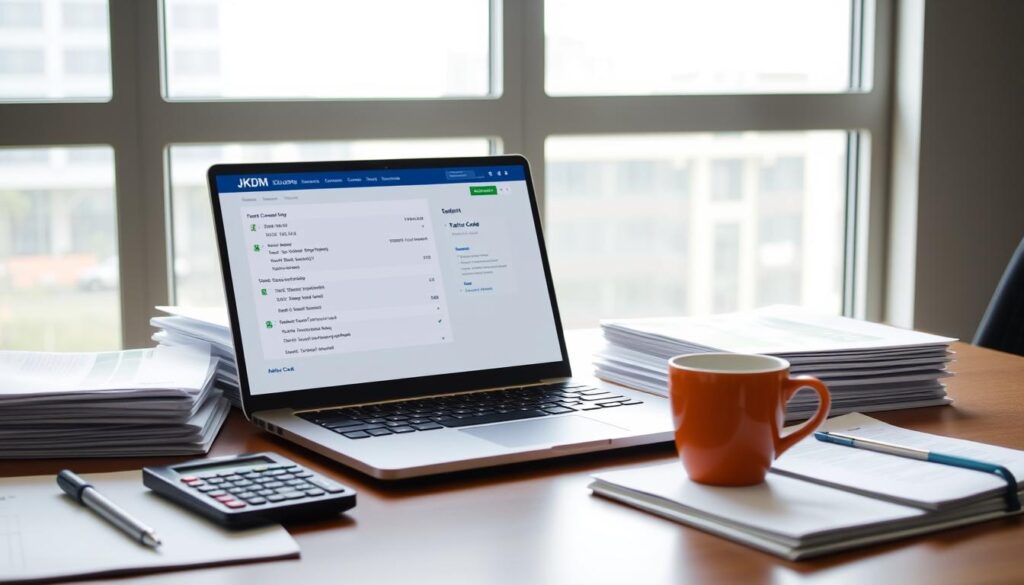
A focused search in JKDM’s PDK 2022 portal is the fastest way to identify the applicable HS entry. We guide you through each step so you can pick the correct code and avoid surprises at the border.
Step-by-step search
Start at the HS Explorer and set the tariff type to PDK 2022. Select Item Description as the search field.
Enter a clear product name and then try keyword variants such as “mobile phone” and “smartphone.” Iterate until descriptions returned match your item.
Match product characteristics to the entry
Compare the returned description to the actual product features: material, function, processing, and composition.
Use supporting data like specs and photos when the item has mixed materials or multiple functions.
Examples and verification
- T‑shirts — 6109.10.00 (cotton)
- Smartphones — 8517.12.00 (handheld communication devices)
- Laptops — 8471.30.10 (portable computers)
Once you have a candidate, switch the search to HS Code and paste the entry to confirm the full official description.
Pro tips for accuracy
Align with supplier documentation and use the same codes across invoices and packing lists. Capture screenshots and save decision notes as internal evidence.
| Action | Why it matters | Result |
|---|---|---|
| Set PDK 2022 | Ensures current national schedule | Accurate applied entry |
| Use keyword variants | Catches phrasing differences in the catalog | Better match to product |
| Verify by HS Code search | Confirms official description | Lower risk at malaysian customs |
Verify, apply tariffs, and check FTA preferences on your HS code
Before applying rates, we always reconfirm the HS entry in JKDM’s HS Explorer to ensure the official description exactly matches the product.
Verification: Run a second search using the HS number in PDK 2022 and compare the returned description to your specs and photos. This confirms the entry text used by malaysian customs.
Check applied tariff and FTA preferences
Switch the tariff type from PDK 2022 to a relevant FTA such as ATIGA to view preferential rates. Confirm rules of origin and required paperwork before assuming reduced duty applies.
Documentation and when to consult
Align commercial invoice, packing list, and declaration wording. Mismatches raise inspection risk and extra duties.
- Record duty outcomes and preference eligibility in your item master.
- Keep versioned evidence: search results, supplier specs, and rulings.
- For complex or high‑value shipments, engage a licensed customs broker and use reputable trade data platforms for corroboration.
“Verify first, document everything, and revisit classifications when inputs change.”
| Action | Benefit | Result |
|---|---|---|
| HS Code search | Official description match | Lower risk |
| Switch tariff type | View preferences | Potential reduced rate |
| Broker consultation | Complex cases | Faster clearance |
tariff code malaysia risks: what goes wrong with misclassification
Misclassification of products can turn a routine shipment into a costly compliance incident. We outline the immediate operational impacts and the longer‑term compliance fallout so you can act before a problem occurs.

Operational impacts: customs delays, shipment holds, incorrect duty or tax
Misclassified entries commonly trigger customs reviews that stall clearance. Holds increase storage, demurrage, and delivery failures.
When a shipment is held, your network faces missed SLAs and emergency rework. That strains carriers and internal logistics teams.
Wrong entries lead to incorrect duty and taxes. You either overpay and lose margin or underpay and face later liabilities on audit.
Compliance fallout: penalties, seizure, and reputational damage for businesses
Regulatory exposure can include fines, seizure, or rejection of goods. Repeated fails damage your compliance profile with customs and partners.
Brand trust suffers when shipping exceptions rise. Customers and carriers may view your business as high risk.
- Products with mixed materials or multiple functions are highest risk; pre‑shipment classification reduces surprises.
- Preventive controls: dual review, supplier alignment, and standardized descriptions tied to the chosen entry.
- Corrective playbook: post‑entry amendments, root‑cause analysis, and staff retraining to stabilize trade performance.
“Verify entries and document decisions to protect clearance timelines and limit exposure.”
Conclusion
Embedding official entries in your systems turns trade data into a business control. We recommend starting each review in the HS Explorer, then align the chosen code to a precise product description and heading.
Embed full codes in your ERP for specific goods and keep versioned evidence. Before booking, evaluate tariff exposure, FTA eligibility, and document origin, specs, and rulings.
Standardize invoices and packing lists so description, codes, and process logic match the actual product. Treat classification as a scalable control: train teams, track error rates, and use experts for complex shipments.
We advise building a living classification library—decisions, data, and supporting files—so your imports and export flows clear customs predictably and protect margins in international trade.
FAQ
What is an HS code and why does it matter for Malaysian imports and exports?
An HS code is an internationally recognized number that classifies traded goods. We use it to determine duties, taxes, and customs clearance. Correct classification reduces delays, avoids incorrect duty payments, and ensures eligibility for free trade agreements and preferential rates.
How does Malaysia extend the global six-digit HS standard?
Malaysia adopts the global six-digit Harmonized System and extends it to eight digits using the AHTN format. The extra digits provide finer product detail for customs, duty calculation, and trade statistics managed by Royal Malaysian Customs (JKDM).
How do we read Malaysia’s 8-digit structure (AHTN)?
The structure moves from chapter to heading, then subheading, and finally the AHTN extension. For example, HS 09012110 breaks down by chapter (09), heading (012), subheading, and the AHTN digits that specify the exact product.
Where can I search for the correct HS code in Malaysia?
Use JKDM’s HS Explorer (PDK 2022) to search by HS code or item description. Choose PDK 2022 in the interface, enter clear keywords or part numbers, and refine results by material, function, or processing to match your product precisely.
What product details matter when matching a code?
Focus on material composition, intended function, processing method, and any finished form. These characteristics determine whether a product falls under one heading or another and affect duties and clearance requirements.
Can you give real examples of common product codes?
Yes. Common classifications include T-shirts under 6109.10.00, smartphones under 8517.12.00, and laptops under 8471.30.10. Use these as starting points and verify specifics against your product details.
How do we verify an HS code and check applied duties or FTA preferences?
Verify the code in HS Explorer using the HS Code search criteria. Then switch tariff type to view applied rates under PDK 2022 or relevant FTAs like ATIGA to check preferential eligibility and duty amounts.
What documentation must align with the HS code for smooth shipping?
Commercial invoices, packing lists, and product specifications must reflect the HS classification. Consistent supplier declarations and certificates of origin are critical for duty calculation and FTA claims.
When should we consult a licensed customs broker or trade data platform?
Consult a broker when classification is unclear, when high-value or regulated goods are involved, or if you face repeated customs queries. Trade data platforms help with benchmarking, historical shipments, and verifying supplier-reported codes.
What operational risks arise from misclassification?
Misclassification can cause customs delays, shipment holds, incorrect duties, and disrupted supply chains. It may also increase storage and demurrage costs while harming delivery timelines.
What compliance consequences should businesses expect for wrong classifications?
Businesses may face monetary penalties, seizure of goods, and reputational damage. Repeated noncompliance can trigger audits and stricter inspections by authorities like Royal Malaysian Customs.
How can we reduce classification errors across shipments?
Adopt standard operating procedures: align supplier-provided HS numbers, maintain detailed product specs, use HS Explorer for each shipment, and retain supporting documents. Regular training and periodic audits also improve consistency.
Are there tools or services to help with tariff and duty management?
Yes. Licensed customs brokers, trade data services, and HS classification software can automate searches, compare historical trade data, and advise on FTA utilization, duty planning, and compliance checks.