Self-billed e-invoice documents occur when a buyer must issue an official e-invoice because the supplier cannot. Under IRBM/LHDNM rules, these buyer-issued records must be validated through MyInvois (portal or API) and carry a unique identifier and QR code. This validation makes the document acceptable for tax and audit purposes.
This guide previews when buyer-issued records apply, what “buyer-issued” means in practice, and why MyInvois validation matters for clean expense substantiation. These documents are not optional in specified scenarios; validation creates stronger audit defensibility and reduces disputes over missing paperwork.
Practically, proper handling helps businesses avoid disallowed deductions and keeps tax records tidy. Later sections will walk through agents and commissions, foreign suppliers, profit distributions, platform settlements, individual payments, and interest handling.
Navigation promise: what it is → why it matters → when it’s required → who does what → how to issue → what fields you need → exemptions.
Key Takeaways
- Buyer-issued e-invoices must be validated via MyInvois with a unique ID and QR code.
- Validation makes records tax- and audit-ready, cutting disputes and denied deductions.
- Self-billed e-invoice rules apply in set scenarios like agents, foreign suppliers, and platforms.
- The guide covers both portal/API flows and required data fields (TIN rules, NA handling).
- Follow IRBM/LHDNM steps closely to maintain compliance and clean expense proof.
Understanding self-billed invoices under Malaysia’s e-Invoice framework
A buyer-created e-invoice becomes the official record when a supplier cannot issue one. Under the e-Invoice Guideline the buyer prepares and submits the document for validation so the transaction is recorded correctly.
Buyer-issued proof of expense
A self-billed e-invoice is a buyer-issued document that serves as proof of expense when a supplier cannot or is not required to provide a supplier-issued record. Once validated, it carries a timestamp, a unique identifier, and a QR code for verification.
How this differs from supplier-issued e-invoices
Normally the supplier issues and the buyer receives the e-invoice. Self-billing flips that role: the buyer assumes issuer duties for specific transactions. This is not about convenience—it’s a compliance step for defined cases.
Why validation via MyInvois matters
IRBM requires that every document enter the national e-invoicing system. Validation via myinvois portal or API means submission → approval → issuance of the unique ID and QR code, which makes the record official for tax and audit use.
| Feature | Supplier-Issued | Buyer-Issued |
|---|---|---|
| Issuer | Supplier | Buyer |
| Validation path | MyInvois portal or API | MyInvois portal or API |
| Official identifiers | Timestamp, unique ID, QR code | Timestamp, unique ID, QR code |
Why self-billed e-invoices matter for Malaysian businesses and taxpayers today
A validated e-invoice from the buyer turns a plain payment into structured proof that an expense occurred. This protects deductibility by showing clear details, a unique IRBM identifier, and a QR code for quick verification.
Expense substantiation and tax records: avoiding disallowed deductions
Auditors commonly ask: “Where is the validated document?” and “Can we verify it via QR code?” A buyer-issued, validated record answers those questions. It provides the transaction classification, the validation date and time, and full line-item details.
Real-time compliance: IRBM validation, QR code, and unique identifier
Validation creates a real-time compliance signal. The unique ID plus timestamp reduces end-of-year cleanup and cuts disputed entries during reviews.
“Validated records are not just paperwork — they build searchable tax trails that hold up under review.”
- Reduce risk: Missing documents weaken your tax position and can lead to disallowed deductions.
- Improve controls: Follow IRBM guidelines so every qualifying payment has an e-invoice trail.
- Month-end value: Timestamps help reconcile cross-border purchases and platform settlements.
What Is Self-Billed Invoice in Malaysia?
When a supplier lacks access to national e-invoicing, the buyer becomes the document issuer.
When the buyer “assumes the supplier role”
A self-billed e-invoice is a buyer-issued, IRBM-validated e-document created when the supplier cannot issue one. The buyer becomes the issuer in the MyInvois system, submits the record for validation, and receives the unique identifier and QR code.
Where this most often appears
Common cases include payments to unregistered individuals and purchases from foreign suppliers outside the MyInvois network. For example, a Malaysian company importing machinery from an overseas vendor may need to generate the validated e-document so the purchase has tax-grade proof.
- Role mapping: buyer = issuer; supplier = commercial counterparty.
- Regulatory driver: these rules are set by IRBM, not optional controls.
- Data needs: clear goods/services descriptions and accurate amounts remain essential because the document becomes primary proof of the transaction.
Scenarios where issuing self-billed e-invoices is mandatory in Malaysia
Certain payment types and settlement flows require the buyer to create and validate the official e-document. Read through these common scenarios to identify when your finance team must act.
Agents, dealers and distributors
Commissions and monetary payments to agents, dealers, or distributors typically trigger buyer-issued records. Many firms that used CP58-style notes must now issue validated e-documents for expense proof.
Cross-border purchases
When a Malaysian buyer acquires goods or services from a foreign supplier who cannot issue a national e-invoice, the buyer issues and validates the record for tax substantiation.
Profit distributions and payouts
Certain profit distributions and dividend-like payouts require buyer-originated documents. Note carve-outs for Bursa-listed entities and single-tier companies; check exemptions later.
Platforms, gaming, individuals and interest
E-commerce platforms that settle with sellers act as buyers and must issue validated records for merchant settlements.
Payouts to winners in betting and gaming are covered, though casino betting and gaming machine winners are currently exempt until further notice.
Acquisitions from private individuals not conducting business — for example, second-hand purchases or private rentals — may require buyer-issued records when the seller cannot supply one.
Interest payments are included, with clear exceptions for bank-charged interest to the public, employee-to-employer interest, and interest from foreign payors to Malaysian taxpayers.
| Scenario | Typical Trigger | Buyer Action | Notes |
|---|---|---|---|
| Agents/Dealers/Distributors | Commissions, fees | Issue validated e-invoice | Replaces CP58-style records |
| Foreign suppliers | Cross-border goods/services | Generate validated record | Use NA or fallback IDs for foreign parties |
| E-commerce platforms | Platform settlements to sellers | Platform issues e-document | Platforms act as buyer for payouts |
| Interest & individuals | Interest payments; private sellers | Issue when supplier cannot | Exceptions apply for public bank interest and listed carve-outs |
Parties and roles in a self-billed transaction
Clear role definitions keep validation workflows smooth and reduce month-end surprises.
Who issues and who is recorded matters. Under IRBM mapping, the buyer issues the e-invoice while the payee is logged as the supplier. That naming convention can trip teams if master data is unclear.
Role mapping for common cases
| Case | System: Buyer (issuer) | System: Supplier (payee) |
|---|---|---|
| Agents / commissions | Principal company | Agent receiving payments |
| Foreign sellers | Malaysian purchaser | Overseas vendor (recorded as supplier) |
| Profit distributions | Payer company | Recipient shareholder |
| E‑commerce platforms | Platform acting as buyer for settlements | Seller receiving payout |
Notifications and operations: After validation, the system may notify both parties, but for cross-border transactions the Malaysian buyer often receives the only official notice.
Finance teams must plan integration (ERP → middleware → MyInvois API) so status updates, validation date, and document details are captured and stored. This prevents gaps and keeps businesses audit-ready.
How to issue a self-billed e-invoice via MyInvois portal or API integration
Start by collecting accurate counterparty and line-item data before choosing a submission route. That prepares you for either a manual run or an automated flow.
Choose submission method
For low volume use the myinvois portal. For high volume choose API or middleware integration to automate posting and status updates. Decide based on controls, month-end load, and error handling needs.
Issuance and validation process
- Identify the trigger and gather payer/payee details and line-item particulars.
- Submit via via myinvois portal or API; IRBM validates the file.
- You receive a timestamp, a unique ID, and a QR code as the validation result.
After validation
Share the validated self-billed e-invoice with the counterparty when required. Note: foreign payees may not be notified under current guidance.
Storage and timing
Keep validated files and a visual copy for audits. For cross-border purchases aim to issue by the end of the following month after customs clearance. Don’t postpone until period close.
| Step | Action | Key output |
|---|---|---|
| Preparation | Gather details and supporting docs | Complete submission package |
| Submission | Portal or API post | IRBM receives file |
| Validation | IRBM checks and approves | Timestamp, unique ID, QR code |
Operational caution: Check validation responses promptly so corrections fit allowed windows and follow proper subsequent documents if needed.
Required information and data fields for generating a self-billed e-invoice
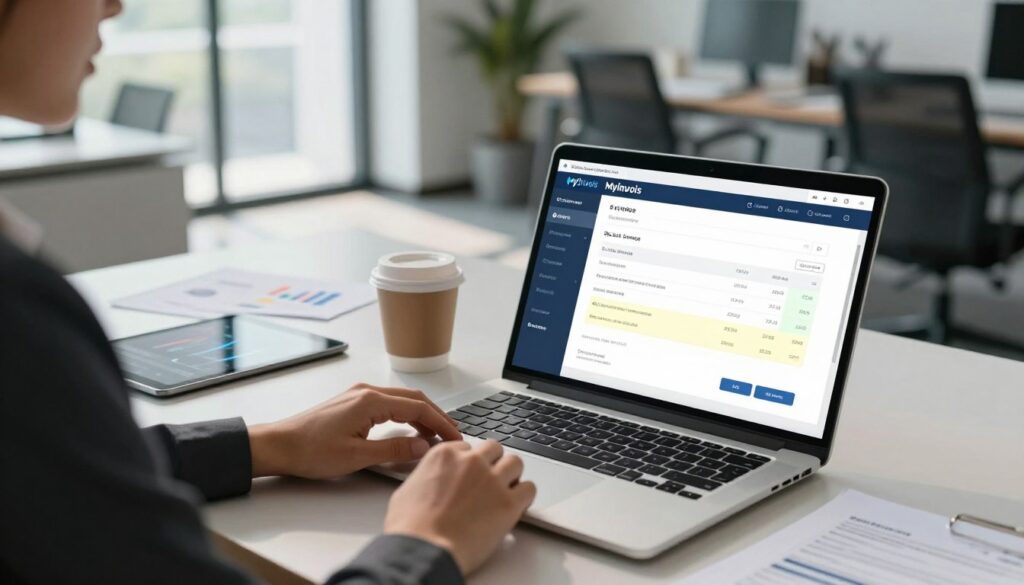
Accurate supplier details and clear line items are the backbone of any valid self-billed e-invoice.
Core supplier identity — collect full name, street address, contact number and SST number. Use “NA” if the supplier lacks SST registration.
TIN and fallback rules — capture the supplier TIN when available. For foreign payees or private individuals, prepare fallback identifiers such as passport or national ID numbers so the system accepts the record.
Registration and passport handling — when standard business registration data is missing, store the supplier’s passport number, registration type, and country. This reduces validation queries and audit risk.
Line-item requirements — include a 3-digit classification code, clear description, quantity, unit price, tax type and tax amount, and accurate totals. Add MSIC code and a short business activity note when applicable.
- Build a checklist: supplier name, contact, SST/“NA”, TIN/fallback, MSIC, 3-digit codes, description, unit data, tax type, totals.
- Double-check codes against the IRBM e-Invoice Catalogue to avoid rejections.
| Field | Example | Why it matters |
|---|---|---|
| Supplier name & contact | ACME Supplies Sdn Bhd | Identifies counterparty for audit |
| SST / “NA” | NA | Shows tax registration status |
| TIN / fallback ID | Passport A1234567 | Enables validation for foreign/private payees |
| Line items & codes | MSIC 472, Code 101, qty 10 | Ensures correct classification & totals |
Exemptions and special compliance rules you should know
IRBM guidance sets out clear carve-outs where e-invoice and buyer-issued records are not required. Knowing these helps finance teams avoid unnecessary work and prevents misclassification of routine payments.
Expenses and income categories excluded from e-invoice requirements
Common exclusions include employment pay, pensions, alimony, zakat and scholarships. These categories are treated as non-business receipts for tax filing purposes, so MyInvois validation is generally not required.
Keep documentation for payroll and benefits, but don’t force an e-invoice process where statutory rules exempt the transaction.
Dividend and profit distribution carve-outs
Bursa-listed issuers and companies under the single-tier taxation system enjoy specific exemptions for certain distributions.
Other distributing entities should still review whether a validated record is needed, since not all distributions qualify for the carve-out.
Employee perquisites and overseas expense handling
Employers may accept receipts or supplier bills issued to employees as valid proof when company policy supports it.
For overseas perquisites and employee-incurred travel costs, receipts from foreign suppliers often suffice; suppliers outside the national system usually do not require buyer-originated records.
Foreign-currency transactions and exchange-rate disclosure
Disclosure rules require stating the exchange rate used for foreign-currency transactions where law or tax rules demand it.
When no legal rate applies, use a consistent internal policy and record the rate applied at the transaction date for audit traceability.
- Exclude non-business income types to avoid over-compliance.
- Confirm whether your distribution qualifies under Bursa or single-tier carve-outs.
- Adopt clear policies for employee receipts and overseas vendor documents.
- Record exchange rates and method for every foreign transaction.
| Category | Typical treatment | Action |
|---|---|---|
| Employment income & pensions | Excluded | Keep payroll records; no e-invoice needed |
| Dividend distributions (listed/single-tier) | Carve-out may apply | Validate exemption status before skipping e-invoice |
| Overseas supplier receipts | Receipts accepted | Store receipts and exchange rate proof |
“Guidelines evolve; review exemptions regularly so your controls remain aligned with current regulations.”
Conclusion
Make validation the default step for any payment where the supplier lacks a standard electronic record.
Core takeaway: a self-billed e-invoice is a buyer-issued, fully validated e-invoice that serves as the official proof for specific transactions. Treat these validated records like supplier documents to protect deductions.
Decision logic is simple: when a supplier cannot provide a record — foreign sellers, private individuals, platform settlements, commissions or profit payouts — the buyer must often issue the self-billed e-invoice.
Operational essentials: gather correct details, submit via MyInvois portal or API, confirm validation outputs (unique ID, QR code, timestamp and date), and store the file for audits.
Remember exceptions and carve-outs for listed or single-tier distributions and excluded income types. Close with a checklist mindset: identify scenarios, assign owners, lock month-end controls, and keep information consistent across payments and transactions.
FAQ
What does a buyer-issued e-invoice mean under Malaysia’s e-Invoice framework?
It means the purchaser prepares and submits an electronic billing record on behalf of the supplier, using the Inland Revenue Board’s MyInvois portal or API. The system validates the record, issues a timestamp, unique identifier and QR code, and returns confirmation to both parties for tax and audit purposes.
How does buyer-issued billing differ from supplier-issued e-invoices?
In buyer-issued billing the buyer controls invoice creation and submission. Supplier-issued e-invoices originate from the seller’s system. Both must meet IRBM/LHDNM validation rules, but roles, notification flows, and record-keeping responsibilities differ.
Why must MyInvois validate these records?
Validation ensures invoice authenticity, correct tax treatment, and real-time compliance. The portal or API enforces required fields, issues a validation ID and QR code, and reduces disputes over deductions, payments, and reporting.
When does a buyer “assume the supplier role”?
That happens when the buyer creates the invoice document, declares supplier details, and submits it through MyInvois on behalf of the payee — commonly for agent commissions, platform settlements, or payments to unregistered persons and certain foreign vendors.
Where is this process most commonly used?
It’s common for marketplace platforms, payment agents, dealers, distributors, cross-border suppliers without Malaysian tax IDs, and purchases from individuals who don’t issue commercial invoices.
Which transactions require buyer-issued e-invoices?
Typical cases include agent and dealer commissions, purchases from foreign suppliers, e-commerce platform settlements, some profit distributions and payout scenarios, gaming or contest payouts subject to exceptions, and payments to unregistered individuals.
Are there notable exemptions to issuing buyer-created e-invoices?
Yes. Certain dividend distributions (e.g., single-tier company payouts or specified Bursa Malaysia cases), some overseas employee costs, and specific categories listed by the tax authority can be exempt. Review IRBM guidance for precise carve-outs.
What roles do platforms and agents play in these transactions?
Platforms and payment agents often act as the “buyer” for settlement purposes. They collect transaction details, submit invoices via MyInvois, notify suppliers, and retain records for compliance and reconciliation.
How are foreign suppliers notified after validation?
The MyInvois system returns validation results to the submitting buyer and can be configured to share the validated e-invoice and QR code with the foreign supplier by email or via integrated APIs, ensuring the supplier has the certified document.
What steps are needed to issue a buyer-created e-invoice through MyInvois?
Gather supplier identity and transaction details, select portal entry or API/middleware submission, send to MyInvois for validation, receive timestamp/ID/QR code, distribute the validated e-invoice to the supplier, and store records for audit.
Should businesses use the portal or integrate via API?
Small firms may prefer the MyInvois portal for manual entries. High-volume sellers, marketplaces, and accounting systems benefit from API integration or middleware to automate submission, validation handling, and storage.
What information must be included when creating a buyer-issued e-invoice?
Required fields include supplier name, address, contact, SST number or “NA” for non-registered parties, tax identification or fallback IDs for foreign sellers, line-item descriptions, classification/MSIC codes when applicable, quantity, pricing, tax type, totals, currency, and transaction date.
How should TINs and passport/ID numbers be handled for foreign suppliers or individuals?
Use the supplier’s TIN where available. If none exists, follow IRBM guidance for fallback identifiers such as passport or national ID, and denote “NA” for SST where not applicable. The portal enforces acceptable formats during validation.
What are line-item and MSIC requirements?
Each line must include a clear description, quantity, unit price, tax type and amount, and totals. Where relevant, include MSIC or business activity codes to classify goods or services for correct tax treatment and reporting.
How is currency and exchange rate handled for foreign-currency transactions?
Disclose the transaction currency and the exchange rate used to convert amounts to Malaysian ringgit if required. MyInvois or your accounting system should record both original and converted figures for audit clarity.
When must validated e-invoices be shared and how long must records be kept?
Distribute the validated e-invoice promptly after receipt of the IRBM confirmation. Retain electronic records and metadata, including timestamps and validation IDs, for the statutory retention period specified by tax rules to support audits.
Are there timing issues for month-end or cross-border purchases?
Yes. Ensure submissions align with tax reporting periods. Cross-border transactions may need early submission to accommodate supplier notification and currency processing before month-end cutoffs.
What happens if required identifiers are missing for a supplier?
The portal may reject the submission or require fallback identifiers. Buyers should obtain correct supplier details beforehand. For persistent issues, consult IRBM guidance or your tax advisor to avoid rejected filings and disallowed deductions.
How does this process protect against disallowed expenses?
Validated, buyer-issued e-invoices provide verifiable documentation tied to tax IDs, timestamps, and unique validation codes. This reduces disputes and supports expense substantiation during audits, lowering the risk of disallowed deductions.
Where can businesses find official guidance and technical specs?
Refer to the Inland Revenue Board (LHDNM/IRBM) MyInvois documentation, e-invoicing guidelines, and the portal’s API technical specs for validation rules, required fields, exemptions, and integration instructions.