We set the stage for 2025 by explaining how the national framework aligns with the global Harmonised System (HS) to classify goods and determine duties.
JKDM operates the HS system here and expects accurate code selection. Correct classification speeds clearance, ensures correct duty and taxes, and prevents fines or shipment rejection.
Common examples show how codes map to real shipments: 6109.10.00 for cotton T-shirts, 8517.12.00 for smartphones, 0901.11.00 for coffee beans, and 8471.30.10 for laptops.
We explain where HS codes appear on invoices and permits, and how they affect regulatory checks across countries in international trade.
Early classification planning helps your business forecast landed cost, set pricing, and agree contract terms with suppliers and buyers.
Key Takeaways
- The HS system is the global basis for classifying goods and setting duty and tariff obligations.
- JKDM enforces national rules; accurate codes reduce delays, fines, and extra taxes.
- Examples like 6109.10.00 or 8517.12.00 show how codes map to products and invoices.
- Correct classification supports better cost forecasting and smoother import/export operations.
- Use the JKDM HS Explorer to verify codes and check applicable duty rates before shipping.
What’s New in 2025 for Malaysia’s Customs Tariff and International Trade
We brief you on the key 2025 updates that change how you plan import and export activity.
On 15 December 2024 the UK joined the CPTPP, and that agreement entered into force with Malaysia. This creates a new free trade relationship between the two countries.
Why this matters: 2025 is treated as “year 8” for staged tariff reductions under CPTPP. Preferential rates can undercut MFN rates for many products when rules of origin are met.
“Preferential access and faster release targets can reduce landed cost and speed delivery when documentation is correct.”
- Compare rates: always check MFN versus preferential rate before you ship.
- Timing: staged reductions affect the applicable rate for specific lines this year.
- Procedures: CPTPP aims for predictable clearance—48-hour release and 6-hour express targets where criteria are satisfied.
- Code accuracy: the right HS code is essential to claim preference and avoid delays.
We recommend reassessing supply chains, updating contracts, and seeking professional support to model duty savings and operational gains.
Understanding the malaysia custom tariff: HS Codes, AHTN 8-digit structure, and JKDM’s role
The Harmonized System gives every product a global identifier that traders rely on for consistent duty checks. The first six digits are harmonized across each country, so you can compare rates and research classification with confidence.
How the Harmonized System works and why the first six digits are global
We explain that the WCO HS sets chapters, headings and subheadings. The first six digits define the product at a global level. This makes cross-border duty research and compliance predictable.
Malaysia’s AHTN 8-digit extension: chapters, headings, subheadings, and national detail
The AHTN adds two national digits for greater specificity. For example, 09012110 denotes roasted coffee, not decaffeinated. Accurate description and specs map directly into the final digits and the applied duty.
Royal Malaysian Customs Department (Kastam): enforcement, classification, and compliance
We note that the royal malaysian customs department enforces classification, valuation, and clearance. Incorrect classification can trigger higher duties, shipment holds, or rejection.
| Item | HS (6-digit) | AHTN (8-digit) | Implication |
|---|---|---|---|
| Roasted coffee | 090121 | 09012110 | Correct code avoids misapplied duty |
| Generic electronics | 851712 | 85171200 | National detail affects FTA eligibility |
| Textiles (cotton T-shirt) | 610910 | 61091000 | Precise description speeds clearance |
How to find the correct HS code and tariff rate in Malaysia using JKDM HS Explorer
We guide you through a clear, step-by-step process to locate the right code and check the applied rate on JKDM’s HS Explorer. Start at https://ezhs.customs.gov.my and keep the tariff type set to PDK 2022.
Step-by-step: Searching by item description under PDK 2022
Select “Item Description” and enter a simple keyword such as “honey” or “laptop.” Choose the entry whose description and material details match your product exactly.
Verifying the code
Switch the search mode to HS code and confirm the system’s detailed description matches your product specs. If wording differs, try near synonyms or more specific terms.
Checking applied duty
To see preferential treatment, change the tariff type to the relevant FTA (for example, ATIGA). Compare the FTA schedule against PDK 2022 to determine whether your import or export qualifies for 0% or reduced duty.
Tips to save time
- Use keyword variants and alternate product names to surface the best matches quickly.
- Align with your supplier’s code when it truly matches the goods and keep documentation consistent.
- Keep core documentary requirements ready—commercial invoice, packing list, and technical sheets—and capture screenshots for audit support.
Leveraging free trade agreements in 2025: CPTPP, ATIGA, rules of origin, and TRQs
We outline how free trade options in 2025 can lower cost and speed clearance. Free trade pathways now include the UK under CPTPP from 15 December 2024. Staged reductions reach year 8 in 2025 for many lines.

CPTPP status and preferential access
With the UK in force, you should check whether your HS line has a reduced tariff under CPTPP or ATIGA. Compare MFN and preferential outcomes to find the best rate.
Rules of origin essentials
To claim 0% or reduced duty, products must meet origin tests such as regional value content, tariff shift, or specific processing rules. Keep supplier declarations and bills of materials ready for verification.
TRQs and advance rulings
Tariff-rate quotas grant limited volumes at lower duty; claims must appear on the import declaration and are not automatic. Advance rulings on classification, origin, or valuation give binding answers within 150 days and last at least three years.
- Quick checklist: validate HS code, confirm the right agreement, test origin, check quota balance, and obtain advance rulings where useful.
Duty, taxes, and customs clearance: Getting imports and exports through smoothly
Accurate HS codes are the single most important data point on shipping paperwork and determine how much you pay at the border. HS codes appear on invoices, packing lists, permits, and declarations. They set the assessed duties and taxes and trigger regulatory checks for your products.
Customs documentation: Where HS codes appear and why accuracy matters
List the correct code on every document. Royal Malaysian Customs reviews classification, valuation, and origin when you submit a declaration.
Provide technical data sheets to support the declared code and the applied rate.
Express and standard clearance timelines
With complete documentation, standard consignments target release within 48 hours. Express shipments aim for a 6-hour window when requirements are met under modern agreements.
Miscalculation risks and penalties
Incorrect codes cause overpaid or underpaid duties, fines from the customs department, shipment holds, and reputational harm. In severe cases, goods may be seized or rejected.
- Controls: maker-checker reviews, code governance, and audit trails.
- When to escalate: seek advance rulings or contact Royal Malaysian Customs for complex classification or origin disputes.
- Quick wins: pre-alert documents, clear product descriptions, and proactive broker communication to reduce delays.
Practical classification examples for Malaysia in 2025
We present clear examples so your team can benchmark classification decisions quickly when preparing imports and export documentation.
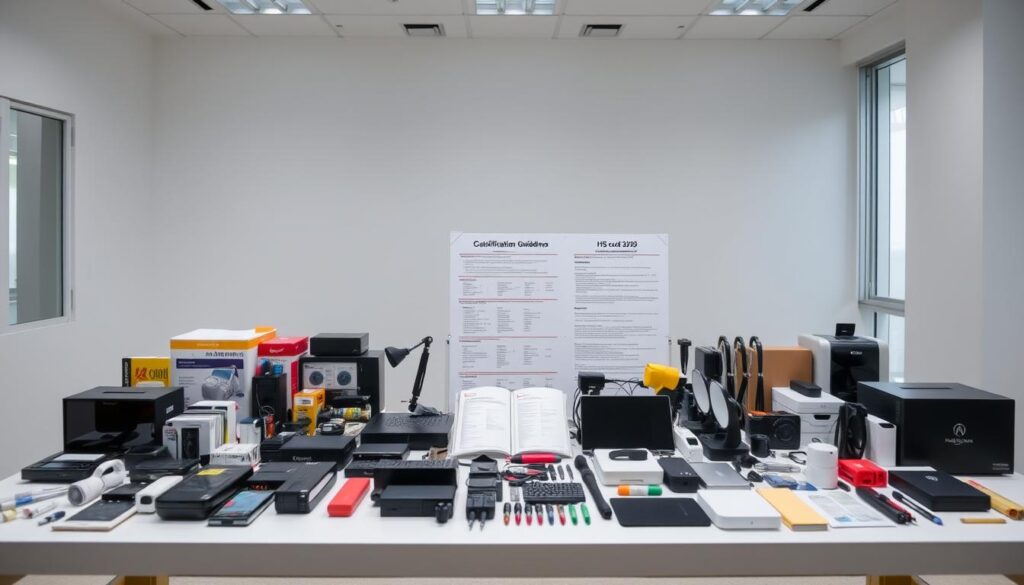
Common HS codes used in apparel, electronics, food and cosmetics
| Product name | 6/8-digit code | Use |
|---|---|---|
| Cotton T-shirts | 6109.10.00 | apparel |
| Smartphones | 8517.12.00 | electronics |
| Coffee beans (not roasted) | 0901.11.00 | food |
| Laptops | 8471.30.10 | portable computers |
| Makeup & skincare | 3304.99.00 | cosmetics |
Illustrative 8-digit breakdown: coffee and electronics
Example: coffee moves from chapter 09 to heading 0901, then subheading 090121 for roasted coffee. The AHTN final digits produce 09012110 for roasted coffee, not decaffeinated.
For electronics, device attributes matter. A portable computer with storage and keyboard maps to 8471.30.10. If the device lacks portability or is an accessory, the code changes and so do applicable tariffs.
- Best practice: keep product description, material list, and photos to support classification.
- Use HS Explorer to validate the chosen code and check any preferential rules before you import or export.
Conclusion
,Precise HS classification is the key to predictable duty and lower tariff exposure when you move goods across countries.
We use JKDM’s HS Explorer under PDK 2022 to verify codes and confirm applied rates. Accurate codes reduce holds, speed release, and support smooth compliance with malaysian customs.
Leverage free trade and trade agreements such as CPTPP and ATIGA to cut costs. Plan for staged tariff changes, track TRQs, and weigh MFN versus preferential paths before you export or import.
We recommend a compliance program with governance, clear documentation, and periodic reviews. Consider advance rulings for complex items to lock in classification, origin, and valuation for years.
Need support? We can review your codes, verify eligibility under free trade regimes, and align paperwork so your shipments clear faster and with the right duties.
FAQ
What is the 2025 tariff schedule and where can I find duty rates and HS codes?
The 2025 schedule lists Harmonized System (HS) codes with national 8-digit AHTN extensions and corresponding duty rates. You can access official rates and explanatory notes via the Royal Malaysian Customs Department portal and the JKDM HS Explorer. Use the AHTN 8-digit code to match national detail and applied duty for imports or exports.
How does the Harmonized System (HS) work and why are the first six digits consistent globally?
The HS is an international nomenclature that groups goods into chapters, headings, and subheadings. The first six digits represent the international classification agreed by the World Customs Organization, ensuring consistent global classification. Countries then add national digits (such as the AHTN 8-digit structure) for local tariff and statistical detail.
What is the AHTN 8-digit extension and how should I use it for classification?
The AHTN 8-digit code expands the international six-digit HS by adding two national digits to capture local distinctions. Use the chapter, heading, subheading, and national digits to fully describe a product for duty assessment, permits, and trade statistics. Match technical specs and composition to the most specific subheading possible.
What role does the Royal Malaysian Customs Department (Kastam) play in classification and enforcement?
The department enforces tariff law, issues binding advance rulings on classification, and conducts audits and inspections. They supervise valuation, origin verification under FTAs, and collection of duties and taxes. Compliance with their documentary and procedural requirements reduces clearance delays and penalties.
How do I find the correct HS code and tariff rate using the JKDM HS Explorer?
Search by clear item description under PDK 2022, then narrow results by chapter and technical criteria. Verify code accuracy by comparing product specifications—materials, use, and manufacturing process—to the legal notes. Switch tariff view to relevant FTA schedules (for example ATIGA or CPTPP) to see preferential rates if you qualify.
What practical tips save time when searching HS codes and rates?
Use keyword variants, include supplier or manufacturer part numbers, and align your description with invoices and technical sheets. Keep a master record of chosen codes and supporting evidence. When in doubt, request an advance ruling to avoid disputes at clearance.
How do free trade agreements like CPTPP and ATIGA affect duty rates in 2025?
FTAs offer preferential rates or duty-free treatment when goods meet rules of origin. CPTPP and ATIGA listings provide specific tariff schedules and product eligibility. If origin requirements are met and documentation is in order, you can claim reduced or zero duty instead of the MFN rate.
What are rules of origin essentials for claiming preferential tariffs?
Rules of origin set criteria for product eligibility—wholly obtained goods, sufficient regional value content, or specific tariff shift/CTC rules. Maintain proof such as certificates of origin, supplier declarations, and production records. Incorrect or missing origin evidence can lead to denied preferential treatment and audits.
When do tariff-rate quotas (TRQs) apply and how are they claimed?
TRQs apply to specified agricultural and sensitive products with a quota volume at a lower rate and a higher out-of-quota rate. Importers must register and apply for quota allocation per the administering authority’s procedures, often on a first-come or allocation basis. Monitor quota announcements and deadlines closely.
What is an advance ruling and why should I obtain one?
An advance ruling is a binding decision from customs on classification, origin, or valuation before shipment. It provides legal certainty, reduces compliance risk, and facilitates planning. Apply with detailed product specs and supporting documents to secure a clear determination.
Which customs documents must show the HS code and what happens if they are inaccurate?
Declarations, commercial invoices, packing lists, bills of lading, and any permit applications should display the HS/AHTN code. Inaccurate codes can trigger reassessments, fines, or shipment holds. Ensure consistency across all documents and retain technical evidence for audits.
What are expected clearance timelines for express vs standard procedures under modernized systems?
Express clearance typically completes within hours to a day for compliant shipments with complete documentation and pre-arrival processing. Standard clearance may take several days depending on inspections, permits, and payment processing. Electronic declarations and pre-lodgement speed up both tracks.
What penalties or risks arise from miscalculating duties or declaring the wrong code?
Risks include duty shortfalls, interest on unpaid amounts, administrative fines, seizure of goods, and reputational damage. Repeated or intentional misdeclaration can lead to criminal prosecution. Accurate classification and timely correction of errors reduce exposure.
Can you provide common HS code examples used locally for key product groups?
Typical groupings include apparel (textiles and garments), electronics (smartphones, components), food (processed and raw commodities), and cosmetics (skincare and makeup). Each group spans multiple chapters and requires specific composition and use details to pick the correct 8-digit AHTN code.
How is an 8-digit AHTN code structured using a practical product example?
Start with the chapter (two digits) and heading (next two digits) to define the product family, then use the subheading (six-digit HS) for technical specifics. Add the two national digits to reflect the AHTN detail. For example, a roasted coffee product is classified by chapter (09) and narrowed through processing and presentation to a final 8-digit national code.