Understanding new tax rules can feel overwhelming for any business owner in 2026. This short guide explains how the consumption tax framework and the new digital invoice system work side by side.
The sales and service levy is governed by the Sales Tax Act 2018 and the Service Tax Act 2018. Meanwhile, LHDN’s digital invoicing rules fall under the Income Tax Act 1967. These two frameworks serve different reporting goals.
They do not replace one another. One focuses on indirect tax collection and the other on income reporting and digital records. Knowing both systems helps your team stay compliant and avoid penalties.
Have questions or need tailored advice? Contact our professional team at +60143422168 to discuss how these services affect your operational workflow and reporting obligations.
Key Takeaways
- Sales and service levies come from the Sales Tax Act 2018 and Service Tax Act 2018.
- LHDN e-invoice rules are enforced under the Income Tax Act 1967.
- These systems serve distinct compliance purposes and do not replace one another.
- Clear processes help businesses manage service tax and digital reporting together.
- Contact +60143422168 for personalized guidance and support.
Understanding the Regulatory Landscape
New rules now tie digital invoicing to business revenue, reshaping compliance duties.
The Inland Revenue Board now links e-invoicing obligations to annual turnover bands. On 7 December 2025, guidelines raised the permanent exemption for small firms to RM1 million.
Phase 4 starts 1 January 2026 for businesses with turnover up to RM5 million. That implementation date is a key milestone for many companies.
The sales and service levy (SST) remains a separate regime under the Royal Malaysian Customs Department. Firms must follow both tax flows and keep records for each system.
- Check your revenue and confirm whether the RM1 million exemption applies.
- Plan software and process changes ahead of the Phase 4 start date.
- Coordinate invoicing and service records to avoid penalties and reporting gaps.
Simple steps now—review turnover, update systems, and train staff—help ensure smooth compliance.
Defining SST vs e-Invoice Malaysia
“Clear, legally valid records matter for both indirect tax and income reporting.”
Businesses face two parallel documents: a formal tax invoice for sales or service tax and a digitally validated e-invoice for income reporting. Each document answers a different regulatory need and must coexist in your accounting flow.
The Role of SST Tax Invoices
The tax invoice documents taxable supplies for registered businesses under the Sales Tax and Service Tax acts. It shows rates, taxable value and acts as the basis for service tax and sales records.
The Purpose of LHDN e-Invoices
The LHDN e-invoice, validated via the MyInvois system, provides real-time validation and returns a unique ID and QR code. This digital record supports income reporting and ties invoices to the annual turnover rules due by January 2026.
- Integration: Ensure your accounting software captures both SST fields and e-invoice data.
- Validation: Each e-invoice must pass MyInvois validation to avoid compliance risks.
Why These Two Systems Cannot Replace Each Other
Two separate regulatory tracks require businesses to keep distinct records for consumption tax and income reporting.
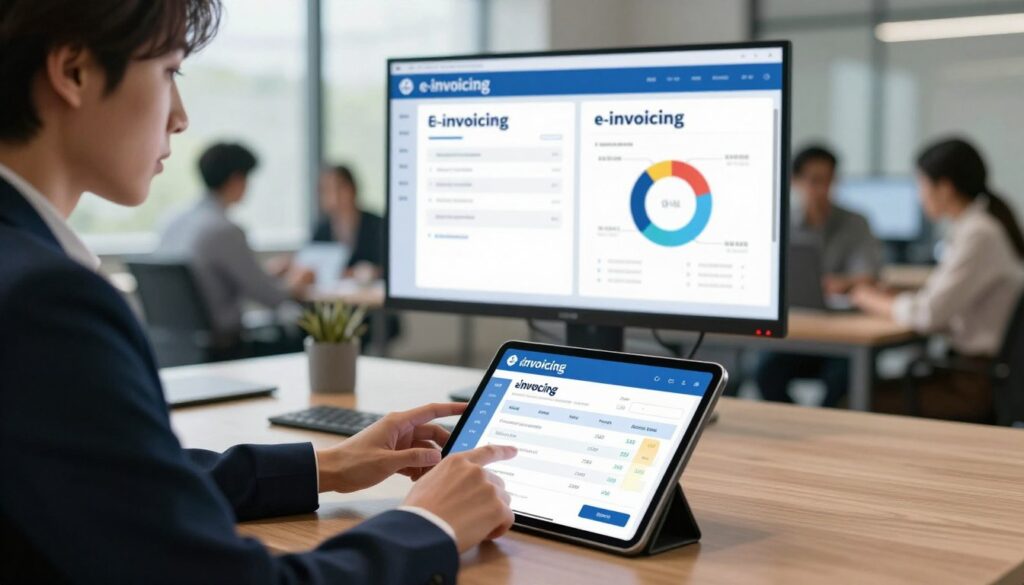
The consumption levy framework and the LHDN e-invoice mandate come from different laws and different authorities. Each system demands its own validation, fields and audit trail.
Using one document to meet both duties creates gaps. An invoice that lacks MyInvois validation or the required tax fields can trigger audits and penalties from either agency.
- Separate obligations: The sst framework and the LHDN e-invoice mandate are independent and cannot substitute for one another.
- Dual documentation: Issue a consumption tax invoice and also generate a validated e-invoice for income reporting.
- Different regulators: The Royal Malaysian Customs Department oversees consumption levies while LHDN enforces e-invoicing rules.
- Audit risk: Relying on a single document is a common mistake that can lead to penalties and compliance failures.
Keep both records separate to ensure services and sales are reported correctly and to reduce your exposure during a review.
Key Differences in Legal Frameworks and Authorities
Legal oversight for consumption levies and digital invoices comes from separate agencies.
The Royal Malaysian Customs Department enforces the sales and service levy rules under the Sales Tax Act 2018 and the Service Tax Act 2018.
The Inland Revenue Board issues the e-invoice mandate via the Income Tax Act 1967, with strict digital validation and UUID/QR requirements.
Comparing Governing Authorities
Practical impact: registration and threshold rules do not match between the two regimes.
- Legal basis: RMCD covers consumption tax; LHDN covers income reporting and e-invoicing validation.
- Thresholds: SST registration thresholds differ from the revenue threshold for e-invoicing compliance.
- Documentation: an e-invoice cannot substitute for a tax invoice required by the customs authority.
- Integration: businesses must keep distinct records for each service and sale to meet both sets of requirements.
Follow both frameworks to ensure full compliance: RMCD for consumption tax and LHDN for transparent, real-time income reporting.
Determining Your Business Compliance Obligations
Knowing your exact annual turnover is the first and most important step to determine whether the e-invoice exemption applies to your business.
Businesses with revenue below RM1 million are exempt from the mandate. Once you cross that threshold, you must follow the phased implementation timeline set by the Inland Revenue Board.
Assess your position regularly. Track rolling revenue so you can react quickly when the threshold is crossed. That prevents missed dates and penalties.
- Assess annual turnover and confirm whether you have service tax registration.
- Follow the phased implementation if your revenue exceeds RM1 million.
- The exemption helps small firms, but service tax registration remains a separate duty for qualifying companies.
- Use this guide to identify your required phase and ensure services are billed correctly.
Proactive tracking and timely registration reduce compliance risk and keep your business aligned with tax and e-invoice implementation rules.
Managing Dual Documentation for Taxable Transactions
Issuing both a tax invoice and a validated e-invoice calls for clear process design. Teams must align timing, fields and customer delivery so records match across systems.

Handling Consolidated Batches
For B2C sales, businesses may use consolidated batches, but individual invoices are required when transactions pass the set threshold.
Plan batch rules in your accounting software to avoid missing individual invoice requirements.
Real-Time Validation Requirements
E-invoices must validate in real time through the MyInvois system. Validation returns a UUID and a QR code that you share with customers.
The 72-hour cancellation window permits corrections if you can justify the change in invoice data.
Managing QR Code and UUID Data
Store UUID and QR meta in your ledger to support audits and reconciliation. Automation reduces double entry and speeds reporting.
| Feature | Requirement | Timeframe |
|---|---|---|
| Validation | MyInvois real-time UUID & QR | Immediate |
| Cancellation | Justified changes only | Within 72 hours |
| Batch handling | Consolidate B2C; separate if over threshold | Per transaction date |
Tip: Choose integrated accounting software that issues both consumption tax invoices and validated e-invoices to keep processes compliant and simple.
Operational Strategies for Seamless Integration
Start by mapping each invoicing touchpoint so your team knows where digital validation fits into daily workflows. This helps plan API connections and avoid duplicate entry.
Connect your accounting software directly to the MyInvois system via API for automated validation. Real-time validation reduces manual errors and speeds up invoice processing time.
Choose specialized software that supports both tax invoices and validated e-invoices. A unified solution improves data accuracy and tracks revenue against the implementation threshold.
- Automate e-invoice validation to ensure consistent compliance and higher validation rates.
- Use a single ledger for invoice data to simplify reconciliation and reporting.
- Engage support early—our team configures integration to handle tax and e-invoicing without downtime.
- Plan training and testing before full rollout to reduce disruption and speed adoption.
Tip: Proper integration saves time, lowers error rates, and ensures your business meets the e-invoicing implementation deadlines.
Navigating the Implementation Timeline and Thresholds
Identify your 2022 audited turnover now to confirm your phase and prepare for deadlines.
Revenue Thresholds and Phase Rollouts
Phase 4 applies to businesses with annual revenue between RM1 million and RM5 million. The mandatory start date is 1 January 2026.
Use your audited 2022 figures to place your company in the correct phase. This determines when the e-invoice implementation becomes compulsory for your invoices.
Keep your sst registration current while you update systems and processes. That keeps both consumption tax and e-invoicing duties aligned.
| Item | Requirement | Effective Date |
|---|---|---|
| Phase | Revenue RM1M–RM5M | 1 January 2026 |
| Basis | Audited 2022 financial statements | Ongoing |
| Actions | Update software, register, test validation | Before deadline |
Tip: Plan integration testing early to keep validation rates high and avoid last-minute interruptions.
Common Misconceptions About Tax Invoicing
Many business owners assume a single digital invoice can satisfy every tax authority, but that idea is misleading.
One frequent question is whether a validated e-invoice replaces the traditional tax invoice. The answer is no. Regulator rules require distinct fields and audit trails for each record.
Businesses must keep issuing the tax invoice that shows levy rates and taxable value. At the same time, you must submit validated e-invoices for income reporting and UUID/QR validation.
- Integrate e-invoicing into your accounting software to avoid duplicate entry and errors.
- If your revenue exceeds RM1 million, prepare for the January 2026 deadline and full implementation.
- Automated solutions reduce manual data mistakes and speed validation.
Tip: Treat the two documents as complementary: one meets consumption tax rules, the other meets income reporting and validation requirements.
Conclusion
A concise compliance plan lets your team handle both digital invoice validation and tax invoice duties smoothly. ,
Keep it simple: map your processes, test integration, and set clear roles so validated e-invoice data and tax invoice fields match.
Successful implementation reduces errors and speeds reporting. Prioritize integration with your accounting system to issue compliant e-invoices and tax invoices together.
Our team can support your business through setup, testing, and ongoing updates. Stay informed, prepare early, and you will minimise risk as new rules take effect.
FAQ
What is the main difference between the sales and service tax invoice and the new digital invoice system for businesses?
The sales and service tax invoice is a document showing tax charged on taxable goods or services, used for compliance with the Royal Malaysian Customs. The digital invoice system run by the Inland Revenue Board focuses on electronic reporting and validation for income tax and transaction traceability. Businesses often need to issue both kinds of records to meet separate regulatory requirements.
Who enforces the traditional tax invoice rules and who runs the electronic invoicing platform?
Customs handles the rules around the goods and services tax framework and its invoices, while the Inland Revenue Board operates the electronic invoicing platform and validation services. Each regulator has distinct legal powers and aims, so companies must follow guidelines from both agencies where applicable.
Do companies have to register for the electronic invoicing system if they already comply with the sales and service tax?
Registration for the e-invoice platform depends on turnover thresholds and the rollout schedule set by the tax authority. Meeting obligations for one system doesn’t automatically exempt firms from the other; you should check your annual revenue against the latest phase-in rules and register if required.
Can the electronic invoicing platform replace the need to issue traditional tax invoices?
No. The two systems serve different legal purposes. Electronic invoices enable near-real-time validation and reporting for the revenue authority, while traditional tax invoices document tax charged and support claims and audits under customs rules. Most businesses will maintain dual documentation processes.
What are the typical technical requirements to integrate accounting or billing software with the e-invoice service?
Integration usually requires API connectivity, secure data transmission (TLS), generation of UUIDs for each invoice, and QR code support where needed. Your vendor should support format standards and enable batch or real-time submission depending on the validation model.
How do real-time validation requirements affect billing processes?
Real-time checks mean invoices may need to be submitted and validated before final issuance, which can change workflow timing. Systems must handle validation responses, retries for transient errors, and fallback procedures to avoid billing delays while preserving compliance.
What is a UUID and why is it important for electronic invoices?
A UUID is a unique identifier assigned to each electronic invoice. It ensures each record is distinct for audit trails and helps the revenue authority and businesses reconcile transactions across systems. Proper UUID generation and storage are essential for compliance.
Are QR codes mandatory on invoices, and what do they contain?
QR codes may be required for certain electronic invoices to enable quick verification. They typically embed key invoice data and the UUID or a validation link. Check the current technical specs from the revenue authority for exact content and placement rules.
How should businesses handle consolidated batched invoices for multiple transactions?
Consolidated batching must still meet validation and recordkeeping rules. Each underlying transaction may require traceability via references or line-level identifiers. Ensure your system can map individual sales or service items to a batch invoice while keeping UUIDs and audit data intact.
What turnover thresholds trigger mandatory participation in the e-invoice program?
Mandatory thresholds depend on the revenue authority’s phased rollout. Common triggers include annual turnover levels and industry-specific deadlines. Verify the latest guidance and calculate your rolling 12-month revenue to see if you meet the threshold for your sector.
Are small service providers exempt from the electronic invoicing requirement if their revenue is low?
Exemptions or delayed timelines sometimes apply for micro and small providers, based on defined revenue thresholds or service types. However, even exempt businesses should prepare for future inclusion and consider voluntary adoption to streamline accounting and compliance.
What operational steps should companies take now to prepare for e-invoicing and continued tax invoice obligations?
Assess current invoicing workflows, review software capabilities, plan API or file-based integration, train staff, and update internal controls for dual documentation. Engage your software vendor or an accounting firm to test submissions and reconcile validation responses before mandated dates.
Will adopting the electronic invoicing platform change how I report sales for tax returns?
Electronic invoicing improves data accuracy and may simplify reporting, but it does not replace tax return filing. The information submitted via the platform will feed into compliance checks and audits, so align your reporting processes to ensure figures match across systems.
What penalties apply for failing to issue required invoices or to comply with e-invoice validation rules?
Penalties vary by regulatory body and can include fines, interest on unpaid tax, and administrative sanctions. Timely compliance, accurate recordkeeping, and responding to validation errors promptly reduce the risk of penalties. Consult your tax advisor for specifics related to your business.
How can businesses choose software that supports both traditional tax invoices and electronic submissions?
Look for accounting or ERP vendors that list certified integration with the revenue authority’s APIs, support UUID and QR code generation, and offer audit trails. Confirm they handle both printable tax invoice templates and secure e-submission workflows to meet dual obligations.
Where can I find official technical specifications and implementation timelines?
Official guidance appears on the Inland Revenue Board and Royal Malaysian Customs websites. These portals publish technical specs, developer guides, FAQs, and phased rollout calendars. Subscribe to their updates or coordinate with your tax advisor to stay current.
Who should I contact for help if my invoices fail validation or I get repeated errors?
First, check your software vendor’s support for integration and format issues. If errors persist, contact the revenue authority’s technical helpdesk with error codes and sample payloads. Keep detailed logs to speed troubleshooting and resolution.