In 2026, the regulatory landscape is shifting faster than it has in a decade. Employers face a new era where mandatory EPF for foreign staff takes effect after October 2025.
The stakes are real: missed updates can trigger financial penalties and invite audit scrutiny. This guide explains the four pillars shaping current requirements and shows what businesses must change now.
Actionable coordination between HR, Finance, and Legal is no longer optional. A cohesive strategy helps protect every employee record, payroll run, and tax filing from costly errors.
Read on for a clear, step-by-step roadmap that helps employers update systems, manage wage reporting, and reduce risk. This guide is designed to be a practical resource for business leaders and payroll teams in the present market.
Key Takeaways
- 2026 brings major regulatory changes requiring prompt attention from employers.
- Mandatory EPF for foreign employees starts post-October 2025.
- Failure to adapt risks penalties and increased audit scrutiny.
- Align HR, Finance, and Legal to manage employee records and tax reporting.
- This guide offers a practical roadmap to update systems and meet new requirements.
Understanding Payroll Compliance Malaysia
Knowing how statutory rules affect staff pay helps teams avoid last-minute surprises.
Payroll compliance means following all laws and rules that govern employee payments. It covers correct worker classification, wage minimums, filing deadlines, and benefits administration.
Defining compliance
At its core, this guide focuses on accurate records and timely filings. Teams must track contracts, hours, and deductions to reduce mistakes and defend against audits.
Key components
- Accurate employee classification and clear contracts.
- Adherence to wage rules and prompt tax filing.
- Proper benefits setup to protect staff rights and company reputation.
- Routine checks to catch and correct common errors early.
| Component | Action | Benefit |
|---|---|---|
| Classification | Verify role and contract type | Accurate deductions and rates |
| Wage Administration | Apply current wage rules | Avoid fines and disputes |
| Records & Filing | Maintain logs and submit on time | Fewer errors, smoother audits |
| Benefits | Enroll staff and verify contributions | Improved trust and retention |
Regular updates keep the process current and reliable. Focused effort here protects staff and keeps payments on time.
The Strategic Importance of Accurate Payroll
Getting employee payments right is a strategic asset, not just an admin task.
Accurate payroll protects a company from legal exposure and keeps financial forecasts reliable.
When rules and reporting change, maintaining precise records keeps cash flow steady. Trusted processes reduce the risk of fines and audits.
High standards of compliance build staff confidence. Workers who see timely, correct pay are more likely to stay and trust leadership.
Use strong controls and routine checks to catch errors early. This guide shows practical steps to tighten processes and adapt to ongoing changes.
| Focus Area | Action | Business Benefit |
|---|---|---|
| Data accuracy | Reconcile entries weekly | Fewer errors, cleaner audits |
| Process controls | Automate validations | Faster runs, lower risk |
| Staff trust | Transparent pay records | Higher retention |
Navigating Statutory Deductions and Contributions
Understanding mandatory contributions prevents costly mistakes and protects staff benefits.
Employees Provident Fund
The Employees Provident Fund requires careful monthly calculation. From wages earned in October 2025, foreign staff and their employers each must pay 2% of salary to EPF.
Action: Recalibrate payroll budgets to include the new employer contribution and update systems to capture foreign-employee contributions.
Social Security Organisation
SOCSO deductions must be computed and remitted on schedule. Correct rates protect employee benefits and reduce legal risk.
Employment Insurance System
EIS contributions are also statutory. Accurate month-by-month remittance ensures employees keep access to insurance benefits when needed.
- Calculate EPF, SOCSO, and EIS deductions correctly each month.
- Update payroll runs to reflect the 2% foreign staff EPF share.
- Keep records to demonstrate adherence to the Employment Act 1955.
| Scheme | Who Pays | Frequency | Key Note |
|---|---|---|---|
| Employees Provident Fund | Employer & Employee | Monthly | Foreign staff: 2% employer and 2% employee from Oct 2025 |
| Social Security Organisation | Employer & Employee | Monthly | Use current SOCSO rates; remit on time |
| Employment Insurance System | Employer & Employee | Monthly | Ensure accurate contributions for benefit eligibility |
Implementing the New Minimum Wage Requirements
As of 1 August 2025 the national minimum wage is RM1,700 per month. Update all payroll systems so the basic salary field reflects this floor.
Allowances, overtime, and incentives must not reduce the RM1,700 base. Calculate basic salary separately and exclude extras when checking wage rules.
Failure to meet the requirement risks heavy penalties. A first offence can bring fines up to RM10,000 per affected employee. Employers should run regular audits to spot errors early.
- Confirm basic salary entries show RM1,700 or above.
- Ensure extras like overtime do not offset the base salary.
- Schedule monthly audits to verify every employee’s record and avoid fines.
| Action | Impact | Priority |
|---|---|---|
| System updates | Correct basic salary display | High |
| Payroll audits | Catch errors before fines | High |
| Staff briefings | Clear expectations on pay structure | Medium |
Mandatory EPF Contributions for Foreign Employees
From October 2025 onward, foreign staff holding valid work permits and receiving monthly wages must be included in EPF schemes.
Operational impact falls across HR and finance teams. Systems need updates to record a new 2% employer contribution and a matching 2% deduction from the employee’s salary.
Operational Impact
Register early. Companies should register eligible employees with the EPF board before the first affected month to avoid admin bottlenecks.
Update software to tag foreign employees, calculate the correct contributions, and produce accurate monthly reports. Reconcile entries each pay run to prevent missed deductions.
“Registering and automating these contributions reduces errors and protects staff benefits.”
- Effective Oct 2025: employers and employees each pay 2% of monthly salary.
- Ensure systems show the deduction and employer contribution separately.
- Run a reconciliation check every month to catch mismatches early.
| Item | Employer | Employee |
|---|---|---|
| EPF (foreign staff) | 2% | 2% |
| Action | Register & update systems | Deduct on salary slip |
| Priority | High | High |
Integrating e-Invoicing into Payroll Workflows
A unified invoicing flow ensures high-value transactions are validated and tracked from payment to record.
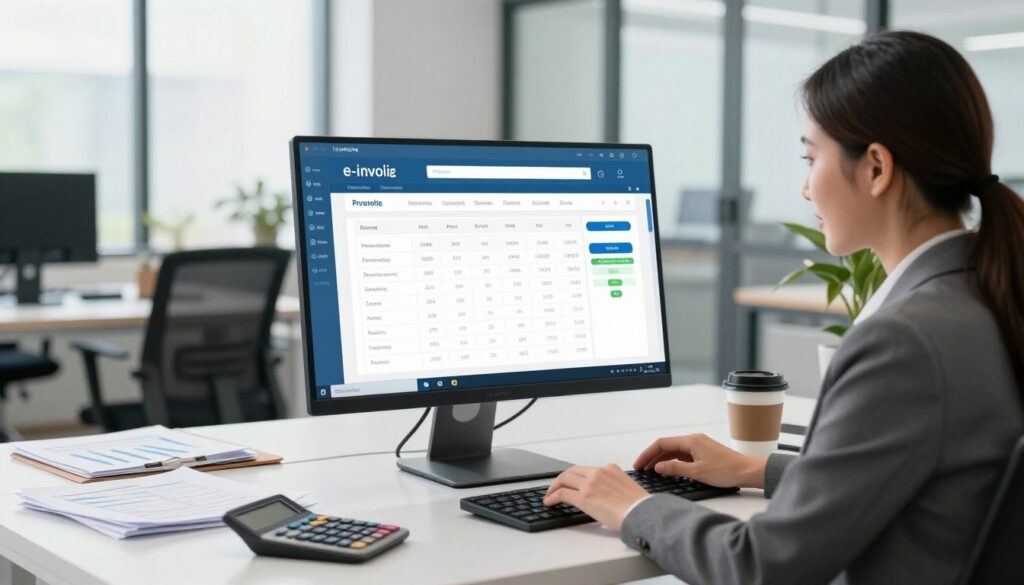
Mandatory e-Invoicing begins 1 January 2026 for businesses with annual revenue between RM1,000,000 and RM5,000,000.
Any single transaction over RM10,000 needs a validated e-Invoice via MyInvois. Integrate your payroll software with MyInvois to automate this step.
Accurate data flow reduces manual entry and errors. It helps with benefits, reimbursements, and income reporting tied to tax filings.
- Implement by Jan 1, 2026: connect systems to meet LHDN requirements.
- Automate validations: each RM10,000+ payment must be stamped in MyInvois.
- Keep audit trails: integration stores records for easier monthly reporting.
| Requirement | Who | Action |
|---|---|---|
| Mandatory e-Invoicing | Businesses RM1M–RM5M | Integrate systems by 1 Jan 2026 |
| High-value transactions | All businesses | Validate via MyInvois for >RM10,000 |
| Reporting & records | Finance & HR | Automate export of data to MyInvois |
“Integrating e-invoicing cuts reconciliation time and secures the audit trail.”
Digital Stamping for Employment Contracts
Digital stamping makes employment agreements instantly verifiable and audit-ready.
All employment contracts are chargeable instruments and must be stamped within 30 days of execution. That small step protects the document’s legal force and keeps records valid in court.
The standard duty is approximately RM10. Paying this fee prevents much larger costs later, as an unstamped contract is not admissible as evidence until penalties are settled.
- Ensure every employment document is stamped within 30 days to keep terms enforceable.
- Integrate LHDN’s STAMPS digital system into onboarding to automate the process.
- Digitizing reduces systemic audit risk and keeps the company ready for disputes.
| Requirement | Action | Benefit |
|---|---|---|
| Stamp within 30 days | Use STAMPS digital portal | Legal admissibility |
| Standard duty | Pay ~RM10 per contract | Low cost, high protection |
| Unstamped documents | Rectify and pay penalties | Avoid evidence exclusion in court |
“Stamping early keeps records valid and avoids surprise penalties.”
Managing Monthly Tax Deduction and Reliefs
Budget 2026 introduces reliefs that affect how you calculate monthly tax. Update MTD/PCB parameters now so monthly calculations reflect new allowances and prevent surprises for employees at year-end.
Tax Relief Expansions
Key expansions include up to RM10,000 for care of children with special needs, including autism, and up to RM1,000 for domestic tourism expenses to support Visit Malaysia Year 2026.
These reliefs can increase net income for eligible staff. Apply them in the tax deduction fields so monthly take-home pay is more accurate.
Reporting Requirements
Payroll administrators must update MTD/PCB settings and document each deduction clearly. Accurate reporting ensures records match LHDN filings and reduces audit queries.
- Update MTD parameters to reflect new reliefs.
- Record RM10,000 special-needs relief and RM1,000 tourism relief where applicable.
- Reconcile deductions monthly to prevent year-end tax shocks.
| Relief | Max Amount | Action |
|---|---|---|
| Children with special needs | RM10,000 | Apply in employee tax profile |
| Domestic tourism | RM1,000 | Claim when eligible expenses are shown |
| Vaccination expenses | As per Budget 2026 | Include supporting documentation |
“Keeping monthly tax settings current protects employees and keeps end-of-year adjustments minimal.”
Common Challenges in Payroll Management
Small data gaps in employee records frequently lead to larger legal and tax problems. These gaps often begin with misclassifying employees or not updating systems when laws change.
Frequent errors show up in overtime calculations and in statutory deductions. Those mistakes trigger audits and can snowball into fines.
Managing staff across regions adds complexity for growing businesses. Multiple calendars, differing tax rules, and varied employment terms create recurring challenges.

Companies that ignore these issues risk financial penalties and harm to their reputation. A proactive approach reduces errors and protects the whole company.
- Check classifications at hire and after promotions.
- Update systems when tax rules change and run test cycles.
- Reconcile overtime and statutory entries before each pay run.
“Addressing common payroll issues early keeps audits rare and fines minimal.”
| Issue | Impact | Action |
|---|---|---|
| Misclassification | Incorrect deductions | Review contracts |
| Outdated settings | Tax errors | Update software |
| Overtime mistakes | Over/under-pay | Automate rules |
Best Practices for Maintaining Payroll Accuracy
Keeping pay runs clean requires simple routines and clear ownership across teams. Small errors in data can cause big problems for employee trust and tax reporting. Make updating systems and checks part of every payroll cycle.
Internal Controls
Update payroll software whenever rates or laws change. That keeps tax calculations and contributions accurate and reduces manual fixes.
Require multiple approvals for salary or overtime changes. A second reviewer catches mistakes before payments go out. Tie approvals to role-based access in your payroll software.
- Run monthly audits to verify contributions and benefits for every employee.
- Use reliable time-tracking to ensure overtime is calculated correctly.
- Train staff on processes so management and data entry stay consistent.
“Clear checks and fast fixes keep salary runs accurate and staff trust high.”
Regular reconciliation between HR records and payroll reports prevents surprises. This guide recommends scheduled reviews and automated alerts to flag mismatches early.
Conclusion
In summary, a proactive approach helps companies turn regulatory change into an operational win.
Payroll compliance Malaysia now demands that businesses modernize controls, update systems, and keep HR and finance aligned.
Stay informed about new laws and run regular checks to reduce long-term risk. Partner with trusted experts to ease major transitions and avoid costly errors.
Prioritizing payroll accuracy builds employee trust and gives your business a stable base for growth across the ASEAN market.
FAQ
What are the main statutory contributions employers must handle?
Employers must manage contributions to the Employees Provident Fund (EPF), Social Security Organization (SOCSO), and the Employment Insurance System (EIS). These cover retirement savings, workplace injury protection, and short-term unemployment benefits. You should also stay updated on income tax deductions and the national minimum wage to avoid fines and audits.
Who must be enrolled in the Employees Provident Fund?
Most Malaysian employees, including many foreign staff under recent rules, must be registered with the EPF. Exemptions exist for specific categories such as government employees covered by separate schemes. Employers should verify eligibility, calculate contributions based on monthly wages, and remit payments by the due date to prevent penalties.
How do SOCSO contributions differ from EPF?
SOCSO provides social security protection for workplace injuries and certain illnesses, while EPF focuses on retirement savings. SOCSO contributions use different contribution rates and employer-employee share rules. Accurate classification of employees and correct wage reporting are essential for proper SOCSO coverage and audit readiness.
What changes affect foreign workers’ mandatory contributions?
Recent updates require employers to register many foreign employees with the EPF and in some cases with SOCSO or EIS, depending on work status. Companies must update contracts, payroll records, and insurance coverage. Check official agency guidance and update payroll software to reflect new rates and reporting requirements.
How should businesses handle monthly tax deduction and reliefs?
Employers must calculate monthly tax deductions (PCB) based on taxable income and declared reliefs. Keep accurate records of employee relief claims and update payroll systems when tax bands or relief rules change. Timely filing and clear payslips help reduce disputes and penalties from the tax authority.
What are common payroll errors that trigger penalties?
Frequent mistakes include late or incorrect contribution payments, misclassifying employees as contractors, wrong wage reporting, and failing to update changes in statutory rates. These can result in fines, audits, and reputational damage. Regular reconciliations and internal controls help prevent these issues.
How does digital stamping and e-invoicing affect payroll processes?
Digital stamping of employment contracts and integrating e-invoicing streamline record-keeping and improve audit trails. They reduce manual errors and speed up approvals. When implementing, ensure your payroll software supports secure document storage, compliant signatures, and electronic invoicing standards.
What internal controls improve payroll accuracy?
Segregate duties across payroll, HR, and finance; perform monthly reconciliations of contributions and taxes; use role-based access in payroll software; and run exception reports for overtime, deductions, and benefits. Regular audits and staff training also reduce risk and improve compliance.
How should companies implement new minimum wage rules?
Review employment contracts and adjust salary structures to meet the new floor. Update payroll rules, overtime calculations, and benefits that link to basic wage. Communicate changes clearly to employees and budget for increased labor costs to avoid retroactive liabilities.
What reporting requirements apply to EPF, SOCSO, and EIS?
Each agency requires timely submission of contribution returns and payment remittances, often monthly. Maintain accurate employee records, contribution schedules, and payment confirmations. Noncompliance can lead to inspections, fines, and enforced recovery actions.
Can payroll software help reduce compliance risk?
Yes. Reliable payroll systems automate calculations for contributions, taxes, and overtime, generate statutory reports, and store audit trails. Choose a solution that updates automatically for rate changes, supports e-invoicing, and integrates with HR and accounting platforms to streamline workflows.
What should employers do if they discover past contribution errors?
Act quickly: correct payroll entries, recalculate outstanding amounts with interest where required, and notify the relevant agencies. Prepare supporting documents and a remediation plan. Proactive disclosure often reduces penalties compared with waiting for an audit.
How do overtime and statutory benefits affect contribution calculations?
Overtime pay and certain allowances can affect contribution bases depending on agency rules. Some benefits may be exempt while others are included in gross wages. Clearly classify each pay element in your payroll system and consult agency guidance to calculate correct contribution amounts.
Where can businesses find official updates on rates and requirements?
Official updates come from the EPF, SOCSO, Lembaga Hasil Dalam Negeri (LHDN) for taxes, and the Ministry of Human Resources. Subscribe to agency notices, attend industry briefings, and work with a trusted payroll provider or tax advisor to stay current with legal changes and avoid fines.