Getting goods through official controls can feel complex. The Royal Malaysian Customs Department is the main authority that oversees import and export rules. Peritrans Sdn Bhd has guided Malaysian importers for over 25 years, helping firms avoid costly delays and seizures.
Every shipment needs accurate paperwork to move smoothly. Proper documentation and a correct commercial invoice ensure duties and taxes are applied fairly. A clear declaration of origin and value reduces the risk of extra port charges, storage fees, or enforcement actions.
The best practice is to partner with a professional freight service that knows local rules. They check permits, forms, and shipment details so your delivery meets government standards. This keeps your supply chain steady and reduces the chance of delays.
Key Takeaways
- RMCD enforces import and export regulations across the country.
- Peritrans Sdn Bhd offers over 25 years of hands-on guidance.
- Accurate invoice and declaration protect against extra fees.
- Work with a freight service to meet permit and form requirements.
- Good documentation reduces delays and keeps deliveries on time.
Understanding the Regulatory Landscape for Imports
Understanding who enforces tariffs and who issues permits helps your team avoid surprises at the port.
The Royal Malaysian Customs Department manages tariff classification and collects duty on all incoming cargo. Their rulings determine how much duty and tax apply to specific goods.
The Ministry of International Trade and Industry issues import permits and strategic trade licences for restricted items. Getting the right permit early prevents holds and costly inspections.
“Clear lines of responsibility between agencies make compliance faster and reduce the risk of fines.”
Plan ahead: verify which agency oversees safety checks for your product category, and confirm paperwork before shipment arrives. Proper compliance speeds clearance and protects your reputation.
- Know RMCD tariff rules and duty rates.
- Confirm MITI permit needs for regulated goods.
- Monitor policy updates to avoid surprises.
Essential Customs Clearance in Malaysia: Documents Needed for Importers
Before a shipment reaches the dock, accurate paperwork decides how fast it moves. A clear commercial invoice and correct HS codes cut inspection time and reduce the chance of storage fees. Major hubs like Port Klang, Northport, and PTP rely on precise forms to release goods quickly.

Commercial Invoice and Packing List
The commercial invoice must list the value, description, and order details. The packing list shows how items are packed and helps during physical inspection.
Transport Documents and Certificates of Origin
Transport papers—Bill of Lading or Air Waybill—serve as proof of shipment and let you claim delivery. A certificate of origin can lower duties under trade deals and verifies the product’s country of manufacture.
Import Permits and Licenses
Restricted products such as food, electronics, or pharma need permits before arrival. Licensed agents use SMK-DagangNet to submit the K1 import declaration to the royal malaysian customs department and arrange payment of duties and taxes.
“Accurate paperwork prevents delays and keeps the supply chain moving.”
| Document | Purpose | Who Submits |
|---|---|---|
| Commercial Invoice | Value, description, payment terms | Exporter / Seller |
| Packing List | Packaging details for inspection | Exporter / Freight agent |
| Bill of Lading / AWB | Proof of shipment and title | Carrier / Shipping line |
| Certificate of Origin | Preferential tariff claims | Chamber of Commerce |
| Import Permit / K1 | Legal entry for restricted items | Licensed agent via SMK-DagangNet |
Navigating the Customs Clearance Process
Electronic filing starts most modern import workflows.
Electronic filing of the K1 starts duty calculation and begins the formal release workflow. Once the import declaration is lodged, the royal malaysian customs uses risk profiling to sort shipments into Green, Yellow, or Red lanes.
Green lane moves quickly with minimal checks. Yellow may need document verification or a short physical check. Red requires a thorough inspection of goods and paperwork.
Electronic Declaration and Duty Assessment
The official system calculates duties and taxes using the declared value and HS code. Accurate HS classification is essential to avoid under‑ or over‑charging during assessment.
New platforms like MyCIEDS speed up the exchange of digital documentation between officers and freight agents. Professional agents help resolve discrepancies and coordinate payments so shipments get release notes on time.
“Timely payment of assessed duties and consistent paperwork cut delays and reduce inspection risk.”
| Lane | What Happens | Action Needed |
|---|---|---|
| Green | Automated approval; minimal checks | Correct invoice, HS code |
| Yellow | Document verification or sampling | Provide supporting documentation via MyCIEDS |
| Red | Full physical inspection | Agent coordination and prompt payment of duties |
Troubleshooting Common Documentation and Clearance Delays
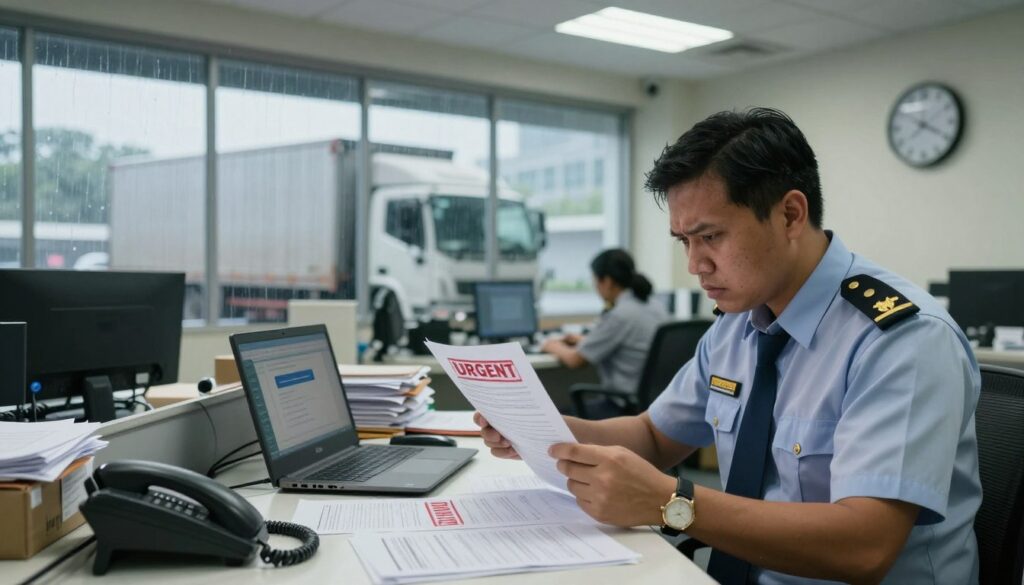
Early review of all shipping paperwork keeps most problems from becoming full‑scale holds.
This short guide explains quick fixes and when to call a specialist.
Identifying and Correcting Errors
Start by checking invoice values, HS code accuracy, and permit status. Mismatched value or description often leads to an inspection or a flagged shipment.
If royal malaysian customs questions undervaluation, provide proof of purchase and payment records promptly. Fixing the K1 form or commercial invoice quickly reduces storage fees and speeds release.
Engaging Professional Customs Brokers
Use an experienced agent when shipments contain regulated items or complex tariff issues. A broker communicates with the customs department and submits corrected paperwork via digital systems.
- Broker benefit: faster corrections and liaison with officers.
- Keep complete records of all shipping documents for at least seven years.
- Remember the separate 10% Sales Tax on Low‑Value Goods (LVG) for online purchases.
“Prompt corrections and a trusted agent prevent small errors from becoming costly delays.”
Strategic Advantages of Free Trade Zones and Authorized Economic Operators
Free Trade Zones (FTZs) and the Authorized Economic Operator (AEO) program give firms clear operational benefits.
AEO status lets trusted traders move goods with priority handling and fewer physical checks by the customs authority.
Operating inside an FTZ—such as the Port Klang Free Zone—allows companies to store and process items without paying duty or tax until goods enter the domestic market. This helps cash flow and shortens lead times for regional distribution.
Practical perks include:
- Priority release and reduced inspections for accredited traders.
- Deferred duty and tax payment while stock stays within the zone.
- Ability to bring raw materials into a bonded warehouse for assembly and later export without duplicate taxation.
“Using trade facilitation tools cuts operational cost and speeds shipment flows.”
| Program | Main Advantage | Action Required |
|---|---|---|
| AEO | Priority handling; fewer physical inspections | Apply, meet security and compliance criteria |
| Free Trade Zone | Deferred payment of duty and tax; improved cash flow | Register site use and maintain accurate documentation |
| Bonded Warehouse | Store and process goods without upfront duty | Use proper declaration and movement forms for each shipment |
Conclusion
Clear records and quick tax settlement keep shipment flows steady and reduce unexpected delays. Accurate documentation, a correct declaration, and neat invoices make the process fast.
Work with a trusted freight service to verify paperwork and to pay duties on time. This builds a positive relationship with malaysian customs and speeds customs clearance.
Careful planning protects goods and keeps shipments on schedule. Stay informed about rules, and prioritise accuracy to avoid fines and slow delivery.
Good preparation today makes international shipping smoother tomorrow.
FAQ
What key papers do I need to import goods into Malaysia?
You need a commercial invoice, packing list, bill of lading or airway bill, certificate of origin, and any product-specific permits or licenses. The invoice must show value and description. The transport document proves shipment. Permits cover items like food, medicines, chemicals, and telecom equipment.
How does the Certificate of Origin affect duty rates?
A valid certificate can reduce or eliminate duties under free trade agreements such as the Malaysia–Singapore or ASEAN treaties. It shows where goods are made. Customs uses it to apply preferential tariff treatment when rules of origin are met.
When is an import permit or license required?
Permits are required for controlled items: pharmaceuticals, pesticides, food products, strategic goods, and certain electronics. Agencies involved include the Ministry of Health, Department of Veterinary Services, and the Malaysian Communications and Multimedia Commission.
What is an electronic import declaration and how do I file it?
The e-declaration goes through the Royal Malaysian Customs online portal. Importers or licensed agents submit shipment details, attach invoices and certificates, and receive a duty assessment. Filing early speeds up release and reduces storage fees.
How are duties and taxes calculated?
Duties are based on tariff classification, customs value, and any applicable preferential rates. GST or sales tax and import duty may apply. Customs assesses value using transaction invoices, freight, and insurance if required.
What common errors cause hold-ups at the port?
Frequent issues include incorrect tariff codes, mismatched product descriptions, missing permits, and incomplete invoices. Minor mismatches can trigger inspections, which delay delivery and increase handling costs.
How do I correct documents after submission?
Submit corrected documents via the customs portal or through your licensed customs broker. Provide clear explanations and supporting evidence, such as amended invoices or additional certifications, to avoid further delays.
When should I hire a licensed customs broker?
Engage a broker when shipment complexity, high duty risk, or regulatory permits are involved. Brokers handle declarations, liaison with agencies, duty payments, and release orders, helping prevent compliance mistakes and delays.
What advantages do Free Trade Zones and AEO status provide?
Free Trade Zones allow storage and value-adding without immediate duty. Authorized Economic Operator (AEO) status grants expedited processing, lower inspection rates, and simplified procedures for trusted traders, saving time and cost.
How long do typical inspections take?
Most inspections finish within a few days, but complex checks for regulated goods can take longer. Pre-clearing documents and using a broker shorten inspection times and ease coordination with port authorities.
Which agencies besides the customs department should I notify for specialized goods?
Notify relevant regulators such as the Food Safety and Quality Division, Malaysian Investment Development Authority (MIDA), and the Department of Standards Malaysia depending on product type. Their approvals may be mandatory before release.
How should I prepare invoices to meet customs requirements?
Use clear item descriptions, correct HS codes, unit values, currency, incoterms, and seller/buyer details. Include invoice date and payment terms. Accurate invoices reduce queries and speed up duty assessment and release.
What payment methods are accepted for duties and taxes?
Payments are typically made through bank transfers, online payment portals linked to the customs system, or via authorized brokers. Confirm accepted methods with your broker or the customs payment portal to ensure timely settlement.
Can shipments be released before duties are paid?
In limited cases, provisional release may occur with bank guarantees or surety bonds, subject to customs approval. Most shipments require payment or an approved security to secure duty and tax obligations prior to release.