
The K1 form acts as the official import declaration issued by the Royal Malaysian Customs Department. It verifies that imported goods entered legally and helps determine the correct duties and taxes.
Accurate documentation keeps your cargo moving. Submit the form with the right invoice, country of origin, value, and date to avoid delays at the port of entry.
Proper customs clearance depends on clean paperwork and a clear audit trail. That record proves your transaction, supports tax claims, and can lower costs when deductions apply.
Professional logistics and freight services simplify the process. They coordinate shipment, delivery, and the clearance steps so items arrive on time and in compliance.
Key Takeaways
- Keep complete documentation to support tax deductions and audits.
- File the form accurately to prevent delays at entry and reduce costs.
- Record date, value, and country of origin for each imported goods shipment.
- Use professional logistics services to manage cargo, freight, and delivery.
- Maintain an audit trail to prove duties and taxes were paid correctly.
Understanding What Is K1 Form in Malaysia? Import Declaration Explained for Business Owners
Customs rely on a precise document to confirm the value, codes, and duties of incoming cargo. This official form lists every item, HS code, customs value, and the duty or tax payable for imported goods.
CIEF often uses their company name on the consignee field to streamline clearance and speed delivery. Listing the correct name and address of the importer prevents holds and extra checks at the port.
Without a valid invoice for imported goods, businesses can face penalties during an audit. Accurate totals for duty and taxes are also essential to support any tax claims your company makes.
- Classify each item with the right HS code to avoid reclassification risks.
- Keep invoices and proof of value to back up declared costs and taxes.
- Use a professional freight or logistics service to handle shipping and clearance tasks.
Clear documentation reduces clearance costs and helps businesses stay compliant while ensuring cargo moves smoothly from ship to delivery.
The Role of Customs Documentation in Your Tax Strategy
Tax authorities expect every import transaction to be backed by matching customs records and payment proof.

Deductible Business Expenses
Keep four core documents to connect your supplier, payment, and customs records. These support a compliant tax claim and show that goods were genuinely imported and paid for.
- Commercial invoice with supplier name, address, and item details.
- Bank transfer or telegraphic transfer as acceptable proof of payment.
- The official customs form recording HS code, customs value, and tax payable.
- Post-clearance receipt from Royal Malaysian Customs that matches payment records.
Audit Trail Requirements
Incomplete records can lead to disallowed claims. Your accounting system must capture the date and exact amount of each transaction.
“A clear audit trail makes it simple to prove that duties, cargo insurance, and related costs are legitimate business expenses.”
| Document | Purpose | Key data |
|---|---|---|
| Commercial invoice | Prove supplier, value, and item details | Supplier name, address, description, invoice date |
| Payment proof | Confirm funds left your account | Bank transfer receipts, remittance records |
| Customs form | Record HS code, customs value, tax payable | HS code, declared value, duty amount |
| Customs receipt | Match clearance and payment | Receipt date, reference number, total paid |
Essential Components of a Valid Import Declaration
A complete declaration must list every shipment detail so customs can assess duties quickly.
Begin by collecting core documents: the commercial invoice, packing list, and proof of payment. These support the declared value and back a smooth customs clearance process.
Key Data Points for Customs Clearance
Importer name, exporter address and the country origin must appear exactly as on supplier records. Mismatched entries lead to holds and extra checks.
Assign the correct HS code to each item. That code drives duty and tax calculations and affects how the system classifies your goods.
Record the customs value based on the transaction price. Also note the date of entry and any insurance or freight costs used to calculate taxes and duties.
Declare any permits or licenses required for a specific type of goods. Use an authorized agent or freight service to access the official portal and submit the declaration on time.
| Component | Why it matters | Action |
|---|---|---|
| Importer name & company | Identifies responsible party for taxes | Verify legal name and address on documents |
| HS code per item | Determines duties and classification | Check tariff guides and confirm with customs agent |
| Customs value & date | Used to compute taxes and audit trail | State transaction price, insurance and freight details |
| Supporting documents | Proof for declared value and origin | Attach invoices, packing lists, permits |
Tip: Use a document review service like Langxu freight to catch errors before submission. Double-check every entry to avoid rejection and protect your records during audits.
Navigating the e-Invoice Framework for Imported Goods
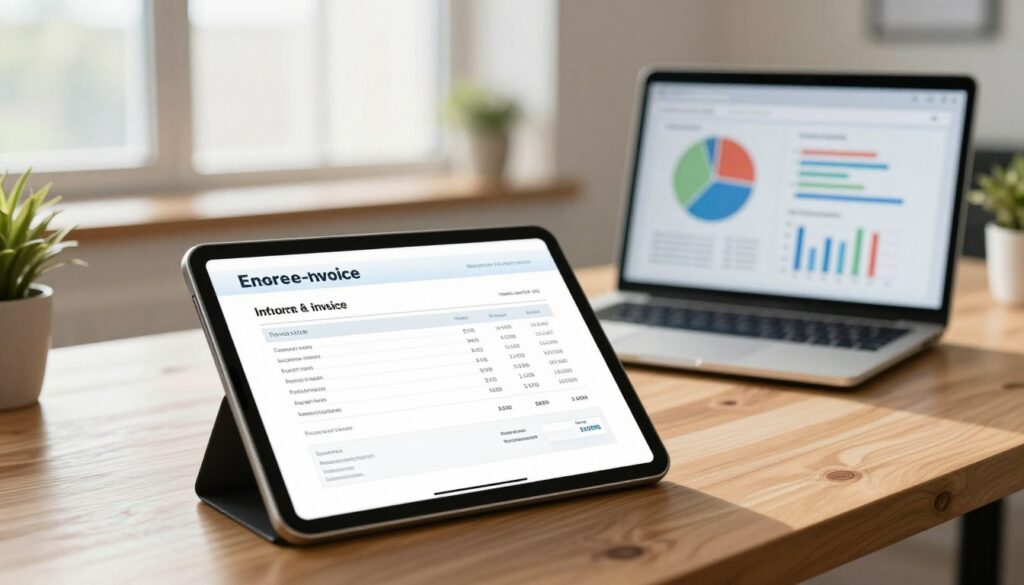
E-invoicing ties cross-border sales to local tax records and closes gaps in import reporting. The framework requires clear entries for date, value, and a concise description of each item.
Self-Billed e-Invoice Requirements
Even when a foreign supplier issues a commercial invoice, the buyer must generate a self-billed e-invoice locally. This document links the foreign transaction to your tax ledger and supports tax claims during a customs audit.
Linking Foreign Transactions
Use a reliable system that integrates with your ERP. JomeInvoice automates issuance, captures high volumes, and records country origin and type of goods.
- Automate the creation of self-billed invoices to reduce manual errors.
- Record the date, value, and HS code for each shipment.
- Keep customs receipts and supporting documentation matched to the invoice.
Avoiding Common Compliance Gaps
Missing supporting documents — such as the customs receipt or a local self-billed invoice — often triggers disallowed tax claims. Systems that link invoices to clearance records lower that risk.
“Automated e-invoicing reduces manual work and helps businesses retain proof needed for audits.”
Benefits of Partnering with Professional Logistics Providers
Choosing a trusted logistics partner streamlines entry steps and keeps goods moving from port to shelf. A specialist like Langxu freight offers end-to-end freight and customs support, from procurement to final delivery.
Accurate paperwork reduces delays. Expert teams complete the form and invoice entries so customs accepts the declared value and code without extra checks.
Providers also offer bonded warehousing and tailored service options. These options secure cargo and simplify the clearance process while lowering storage costs and time at the port.
Tax and insurance records stay clear. A professional company documents insurance, shipping costs, and payment proof to support your tax claims and audits. That saves businesses money by avoiding rework and penalties.
- Faster delivery through coordinated freight and clearance.
- Fewer rejections thanks to correct documentation and a robust system.
- Ongoing updates on customs rules so your business adapts quickly.
“Outsourcing clearance to an expert reduces operational burden and protects your import value.”
Conclusion
Accurate records keep goods flowing and cut delays at customs. File the correct form and match receipts to support your tax position. This simple step reduces risk and speeds clearance.
Work with a trusted logistics and freight service to meet documentation requirements and manage paperwork. Professional services help confirm codes, dates, and insurance details so your tax claims stand up during audits.
Maintain clear proofs for every shipment of goods, secure cargo insurance, and adopt an e-invoice system. These actions make compliance easier and protect your business when authorities review records.
FAQ
What does the K1 document cover for imported shipments?
The K1 document records key shipment details used during customs clearance. It lists the importer’s company name, supplier, item descriptions, country of origin, HS code, invoice value, freight and insurance costs, and intended delivery address. Customs uses it to assess duties, taxes, and any license checks before release of cargo.
Who must file the declaration and when should it be submitted?
Importers or their appointed customs brokers must file the declaration before goods reach customs control. Filing occurs upon arrival or via the online system prior to entry. Timely submission speeds up clearance and helps avoid storage or demurrage charges from carriers and warehouses.
How does the K1 entry affect duty and tax calculation?
Duty and tax calculations rely on declared transaction value and HS classification on the form. Customs adds freight, insurance, and other landed costs where required. Accurate invoices and proof of transaction are essential to ensure correct tariff and GST or sales tax charges.
Can goods be cleared without a commercial invoice or freight document?
No. Customs requires a commercial invoice, airway bill or bill of lading, and packing list alongside the declaration. Missing paperwork leads to inspection holds. Logistics providers and carriers usually request complete documentation before handing over cargo to customs.
What supporting documents should accompany the submission?
Typical attachments include the commercial invoice, bill of lading or airway bill, packing list, certificate of origin, insurance policy, and any import permits. For restricted items, include licenses or health certificates. Keep electronic copies ready for the e-invoice framework.
How does origin affect duty rates and trade programs?
Country of origin determines preferential tariffs under free trade agreements and whether anti-dumping or safeguard duties apply. A valid certificate of origin can lower or eliminate duties for eligible shipments, so ensure compliance with origin rules.
What penalties apply for incorrect or false declarations?
Incorrect or fraudulent declarations can trigger fines, seizure of goods, and criminal prosecution. Even innocent errors may incur penalties and delay release. Maintain an audit trail and work with a licensed customs agent to reduce risk.
How do businesses claim deductible costs related to import duty and tax?
Import duty and sales tax paid at entry can be recorded as a deductible expense for accounting and tax purposes if properly documented. Retain invoices, payment receipts, and the customs release order to support deductions during audits.
What role does the e-invoice system play for cross-border purchases?
The e-invoice system standardizes invoicing data and links foreign transactions to local tax reporting. Self-billed e-invoices and linked supplier records simplify compliance, speed up VAT or sales tax recovery, and create a clear electronic audit trail for customs and tax authorities.
How should self-billed invoices be handled for imported items?
When using self-billing, ensure the e-invoice includes supplier details, import values, HS codes, and reference to the customs entry. Both parties must agree to the arrangement and keep records that satisfy customs and tax filing requirements.
What common compliance gaps cause delays at customs?
Frequent gaps include wrong HS codes, undervalued invoices, missing certificates of origin, incomplete consignee details, and mismatch between invoice and bill of lading. Address these early with your freight forwarder to prevent inspections and penalties.
How can logistics partners improve clearance speed and reduce costs?
Experienced freight forwarders and customs brokers prepare accurate declarations, obtain permits, arrange pre-clearance where available, and optimize shipping terms to lower landed costs. They also handle duty optimization and warehousing to reduce demurrage and storage fees.
Are insurance and freight always included when declaring value?
Declared value often includes freight and insurance for ad valorem duty or tax calculations, depending on valuation rules. Confirm whether you must report CIF (cost, insurance, freight) or FOB (free on board) values and provide supporting freight and insurance invoices.
How long should import paperwork be retained for audit purposes?
Keep import declarations, invoices, bills of lading, certificates, and e-invoice records for the statutory retention period—typically five to seven years depending on tax authority rules. Proper retention supports audits and proves deductible expenses.
Where can businesses get help preparing declarations and invoices?
Use licensed customs brokers, freight forwarders such as DHL Global Forwarding or DB Schenker, or tax advisors for complex entries. These providers assist with HS classification, valuation, e-invoice setup, and customs clearance to ensure compliance and faster delivery.