
Starting 1 July 2025, TNB in Peninsular Malaysia moved to a five-part billing model under the RP4 framework. We outline the new structure so you can see what changed and why it matters.
The plan splits charges into Energy, Automatic Fuel Adjustment (AFA), Capacity, Network, and Retail. Energy rates are 27.03 sen/kWh for up to 1,500 kWh and 37.03 sen/kWh above that. Capacity sits at 4.55 sen/kWh and Network at 12.85 sen/kWh. Retail is RM10 per month.
AFA replaced ICPT and now adjusts monthly as a per-kWh rebate or surcharge based on fuel costs. Domestic users may opt for Time-of-Use (ToU) with off-peak windows that can lower your bill if you shift load outside peak hours.
We explain incentives, including a Retail waiver for ≤600 kWh, Energy Efficiency rebates up to 25 sen/kWh for ≤1,000 kWh, and RM40/month e‑Kasih help. Our aim is to help you interpret the new system, estimate exposure in sen/kWh, and spot practical steps to optimize your bills.
Key Takeaways
- RP4 introduces a five-part structure for clearer billing components.
- Energy charges of 27.03 and 37.03 sen/kWh form the main base rates.
- Capacity (4.55 sen/kWh) and Network (12.85 sen/kWh) add to base charges before AFA.
- AFA is reviewed monthly and can raise or lower your monthly amount.
- ToU and incentives offer real savings for households that adjust usage.
- Most consumers using ≤900 kWh may see similar or slightly lower bills per TNB guidance.
Malaysia’s new electricity pricing: what changed and when
From 1 July 2025 the Energy Commission moved Malaysia to a component-based billing model that runs through 31 December 2027. This new approach replaces legacy block rates with a five-part structure meant to reflect actual system costs and improve transparency.
RP4 timeline and the Energy Commission’s overhaul (July 2025–December 2027)
The RP4 period sets the regulatory window for the new system. The Energy Commission approved the change to run from July 2025 to December 2027. The shift aligns prices more closely with underlying power and network costs.
Who’s affected: domestic users, non-domestic, and smart meter rollout
Domestic households are included by default. Low Voltage Non-Domestic customers can also opt into the new Time-of-Use scheme from 1 July 2025. Eligible consumers need smart meters to enroll; TNB will install them in phases at no charge, with prior notices sent to affected premises.
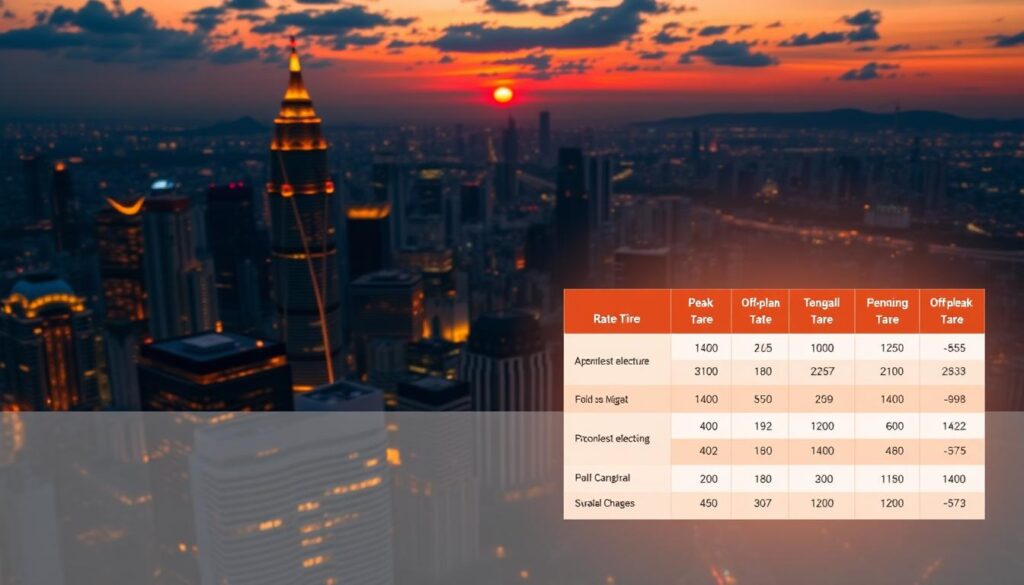
- Automatic fuel (AFA) replaces ICPT and is adjusted monthly to reflect fuel costs more responsively.
- ToU windows: weekday peak 2:00pm–10:00pm; off-peak at other hours and all weekend off-peak.
- Users with flexible hours or shiftable loads can see the first benefits in month-to-month bills.
electricity tariff mechanics: components, sen/kWh rates, and monthly AFA
This section breaks down the cost elements you’ll see on monthly statements and how they add up.
The five-part structure
We list the five components and show how each contributes to your per‑kWh and monthly totals.
- Energy – base rate per kWh (banded at 27.03 or 37.03 sen).
- Automatic Fuel Adjustment (AFA) – monthly fuel-linked per‑kWh rebate or surcharge.
- Capacity – 4.55 sen/kWh to cover generation availability.
- Network – 12.85 sen/kWh for grid services.
- Retail – RM10 per month (waived for some users).
Sample rates and ToU vs General
Compare core rates and ToU windows to spot savings opportunities.
| Component | General (≤1,500 kWh) | General (>1,500 kWh) |
|---|---|---|
| Energy | 27.03 sen/kWh | 37.03 sen/kWh |
| Capacity | 4.55 sen/kWh | 4.55 sen/kWh |
| Network | 12.85 sen/kWh | 12.85 sen/kWh |
| ToU Peak / Off‑peak Energy | Peak: 28.52 / Off‑peak: 24.43 sen/kWh | Peak: 38.52 / Off‑peak: 34.43 sen/kWh |
AFA, incentives and reading your bill
The automatic fuel adjustment replaces ICPT as a monthly fuel adjustment. It can be a rebate or a surcharge and will change your effective sen/kWh each month.
Incentives include an Energy Efficiency rebate up to 25 sen/kWh (for ≤1,000 kWh), RM10 retail waiver for ≤600 kWh, and RM40/month e‑Kasih support for eligible users.
To estimate net cost: add Energy + Capacity + Network + Retail ± AFA, then apply incentives. The monthly statement itemizes each line so you can verify rates and adjustments.
Impacts, choices, and strategies under the new tariff
We outline how households, businesses and large facilities should respond to the new componentised structure.
Household outcomes and practical savings
Most consumers using ≤1,000 kwh should see bills stabilise thanks to incentives and the base energy bands.
Monthly automatic fuel adjustment (afa) can still nudge totals up or down, so monitor AFA updates each month.
To cut costs, schedule washers, dishwashers and EV charging into off-peak ToU windows. Simple load shifts deliver measurable savings.
Business and data centre responses
Commercial users face stronger exposure to capacity and network charges. Accurate load profiling is essential for budgeting.
For a 100 MW data centre, industry estimates show USD 15–20 million in added annual costs under componentised billing. Firms must improve power usage effectiveness and consider alternate sourcing.
Green paths: GET, RECs and blended supply
GET now offers flat-rate surcharges of 5, 4 or 3 sen per kwh (1–3 year terms). This predictable surcharge and RECs make renewable energy procurement simpler and cheaper than prior tiers.
The GET GreenPath option adds a 0.2 sen/kwh management fee for large users. Pairing GET with on-site renewables and demand shifting reduces reliance on grid electricity at peak price times.
- Track fuel prices and afa updates to refine monthly forecasts.
- Test ToU scenarios before committing; simulate schedules to quantify savings.
- Consider GET and RECs for sustainability reporting and long-term cost predictability.
Conclusion
We close by outlining practical steps under RP4 to manage monthly exposure and capture savings.
RP4 creates a clear component-based structure with monthly AFA updates, defined ToU windows, and targeted incentives such as the EEI rebate, retail waiver for ≤600 kWh, and e‑Kasih support. Benchmark your kWh use and model Energy, Capacity, Network and Retail lines before overlaying AFA and incentives to see real month-to-month effects.
Validate whether ToU matches your daily pattern and shift loads where feasible to reduce your effective cost. Larger users should evaluate GET and GreenPath for predictable surcharges, RECs, and renewable energy paths that strengthen sustainability and budget clarity.
We can support you with bill analytics, load profiling, tariff selection, and a practical roadmap to capture measurable savings under the current system. Contact us to start a structured review tailored to your needs.
FAQ
What are the main components of the new electricity tariff structure?
The new model splits charges into five parts: Energy (sen/kWh), Automatic Fuel Adjustment (AFA) which is a monthly fuel-linked rebate or surcharge, Capacity (sen/kWh), Network (sen/kWh), and a fixed Retail charge (RM). Each component shows separately on your bill so you can see how consumption and fuel prices affect costs.
When does Malaysia’s RP4 timeline take effect and what changes should consumers expect?
RP4 runs from July 2025 to December 2027. The Energy Commission’s overhaul introduces the five-part structure, a phased smart meter rollout, and monthly AFA updates replacing ICPT. Households and businesses will see more granular billing and time-of-use options as the transition progresses.
Who is affected by the revised rates and how will smart meters play a role?
Domestic users, non-domestic accounts, and large consumers such as industrial sites and data centers are covered. Smart meters enable Time-of-Use pricing, accurate interval readings, and help consumers shift load to off-peak hours for savings. Rollout timing will vary by distributor.
How does the Automatic Fuel Adjustment (AFA) work and how often does it change?
AFA is a monthly adjustment tied to actual fuel and generation costs. When fuel prices rise, AFA becomes a surcharge; when prices fall, it becomes a rebate. It appears as its own line item so monthly bills reflect short-term fuel market movements rather than fixed multi-year subsidies.
What are typical sample charges under the new system?
Sample level charges include energy rates around 27.03–37.03 sen/kWh, capacity at about 4.55 sen/kWh, network roughly 12.85 sen/kWh, plus a retail charge commonly near RM10 per month. Final bills combine these with any AFA value and applicable incentives or rebates.
How does Time-of-Use (ToU) pricing differ from General rates?
ToU differentiates peak, shoulder, and off-peak hours, offering lower rates in off-peak windows and higher rates during peak demand. For accounts with consumption up to and above 1500 kWh, ToU can yield significant savings if loads shift to off-peak periods, while general rates apply a single blended rate.
What rebates and support measures are available to lower bills?
The scheme includes targeted measures such as an Energy Efficiency Incentive, possible retail charge waivers, and socio-economic support like e-Kasih assistance. These aim to protect vulnerable households and encourage demand-side efficiency investments.
How should consumers read the new bill to understand charges clearly?
Look for itemized lines showing sen/kWh for energy, capacity, and network, the AFA line for monthly fuel adjustments, and the fixed retail charge in RM. Transitional statements may explain rate changes during RP4. Compare usage patterns across billing cycles to identify savings opportunities.
What are practical steps households can take to reduce monthly costs?
Shift high-energy activities to off-peak hours, improve efficiency with LED lighting and efficient appliances, install smart plugs or timers, and consider energy audits. For larger reductions, rooftop solar or participation in green programs may lower grid dependence.
How will businesses and data centers be impacted, and what responses are effective?
Businesses face higher exposure to capacity and network charges and variable AFA swings. Effective responses include demand-side management, load scheduling to off-peak slots, power factor correction, and exploring bilateral renewable supply or Green Electricity Tariff options to manage costs.
What options exist for organizations seeking to decarbonize under the new pricing?
Organizations can opt for the Green Electricity Tariff (GET) which includes a flat-rate surcharge for certified renewable supply, purchase Renewable Energy Certificates (RECs), or enter power purchase agreements. These strategies reduce carbon intensity and can hedge against future fuel-linked adjustments.