The Inland Revenue Board has rolled out mandatory digital invoicing rules that affect many companies today. Understanding the new landscape helps your team meet tax obligations and avoid fines.
This short guide explains when your firm must issue a self-billed e-Invoice and how the inland revenue defines payment types that require a formal electronic invoice. The goal is clear: keep records accurate and compliant.
Following these rules reduces audit risk and streamlines daily accounting. We’ll highlight the key e-invoice requirements that change reporting and cash flow practices for local business operations.
Key Takeaways
- The revenue board now enforces mandatory electronic invoicing for specific transactions.
- Know which payment categories trigger the need for an e-invoice to stay compliant.
- Issuing the correct invoice helps prevent penalties and supports clear tax reporting.
- Digital invoicing affects both routine billing and long-term financial records.
- Use this guide to align your operations with inland revenue expectations.
Understanding the Basics of Self-Billed e-Invoice Malaysia
To keep accounting clear, a buyer may need to create a self-billed e-invoice when the supplier cannot supply a proper invoice. This practice records the sale, shows the correct expense, and supports accurate tax reporting.
What is a Self-Billed e-Invoice
A self-billed e-invoice is an electronic invoice that the buyer issues to document a transaction on behalf of the supplier. It names the supplier, lists the expense, and carries details needed for accounting.
“The MyInvois portal is the primary system used for validation of e-invoices by the revenue board.”
Why Compliance Matters
The inland revenue requires this process to ensure every business transaction is tracked for tax purposes. Using the MyInvois portal lets companies submit documents for validation so the revenue board recognizes the invoice as legitimate.
- Accurate records: Proper invoicing reduces audit risk.
- Validated transactions: The system confirms the invoice and supplier details.
- Smooth operations: Compliance keeps payments and reporting on track for businesses and buyers.
Identifying When Your Business Must Issue a Self-Billed e-Invoice
Not all payouts need special documentation, but several common scenarios do. Knowing these situations helps buyers and payers keep records correct and meet inland revenue expectations.
Payments to agents, dealers, and distributors: When your business pays commissions or fees to agents, dealers, or distributors, the buyer is required to issue a self-billed e-invoice to record the transaction and expense.
Payments to Agents and Distributors
Commissions and dealer payouts are treated as special payments. The payer must create an electronic invoice if the supplier does not provide one. This keeps tax reporting clear and reduces audit risk.
E-Commerce Platform Obligations
Major platforms like Shopee, Lazada, Zalora, and TikTok Shop must facilitate e-invoice records for sellers who don’t supply an invoice. Operators often issue the e-invoice to capture the seller’s sale and related payments.
Payouts to Betting and Gaming Winners
Licensed betting and gaming operators must issue an e-invoice for prize payouts. The rule also covers payouts to individuals and certain insurance or profit distributions where the payer records the expense for tax purposes.
- Foreign supplier cases: Buyers often issue the e-invoice for cross-border goods or services.
- Interest and special payments: Interest to non-financial parties, insurance claims, and profit distributions can also require issuing self-billed records.
Navigating Special Payment Categories and Exemptions
Not every payout needs formal documentation, but nine defined categories demand attention. Understanding these scenarios helps your buyer determine when to issue self-billed e-invoice records.
Key cases include:
- Payments to agents, dealers, and distributors for commissions or fees.
- Imports of goods or services from a foreign supplier where the buyer must document the transaction.
- Payments to individuals not operating a registered business, such as rental or casual payouts.
- Capital reduction, share buybacks, and many profit distribution events.
Insurance claim payouts and interest to non-licensed entities also require the payer to issue records. Proper classification of each transaction reduces audit risk and keeps tax reporting accurate.
“Classifying payments correctly is the fastest way to avoid penalties and simplify audits.”
| Payment Category | Buyer Must Issue | Notes / Exemptions |
|---|---|---|
| Agent/Dealer Commissions | Yes | Common; documents expense and tax liability |
| Foreign Supplier Imports | Yes | Buyer records cross-border goods/services |
| Dividend Distribution | No (typical dividend cases) | Dividends from companies like Sdn Bhd are exempt |
| Insurance & Claim Payouts | Yes | Applies to individuals and businesses |
Action tip: Review your payout types against the nine categories. If a transaction matches, prepare to issue self-billed documentation to keep tax records clean and compliant.
Step-by-Step Guide to Issuing Your e-Invoice
Start each submission with a simple validation routine to keep records audit-ready.
Gather required details. Confirm the supplier name, payment date, amount, and all data needed to fill the 51 mandatory fields. Missing items cause validation failures and delays.
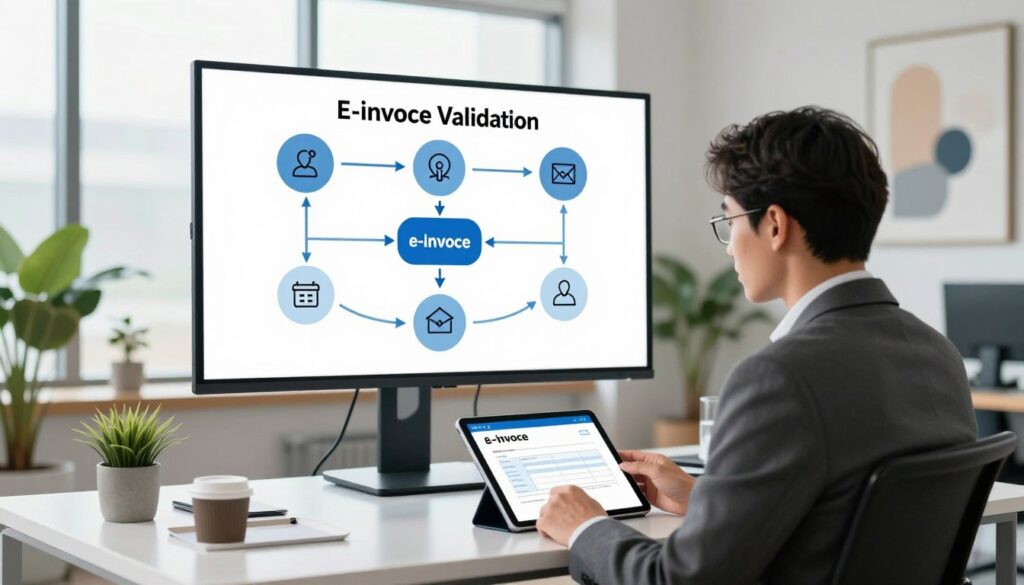
Create the record on the MyInvois portal. Use the platform to compose the e-invoice. The system validates entries and flags missing or inconsistent data before final submission.
Validation and Record Keeping
After submission, watch the validation result. The portal confirms the transaction is recorded or returns errors to fix.
- Fix errors quickly — you have 72 hours to reject or cancel a validated invoice if needed.
- Retain every validated invoice for tax audits and company records.
- If you issue records for many transactions, submit them by the end of the following month.
“Use the portal as your central hub to manage e-invoicing and ensure compliance.”
Following these steps helps any buyer issuing self-billed e-invoice records reduce mistakes. Good record keeping protects your business and the supplier, and it keeps payments and tax reporting clean.
Managing Cross-Border Transactions and Foreign Suppliers
Handling foreign supplier transactions adds extra steps to make sure expenses and taxes are tracked correctly.
Definition: A foreign supplier is any entity operating outside the country or not established locally.
When a buyer acquires goods or services from a foreign supplier, the buyer must issue self-billed e-invoice documentation to record the expense. This applies even when the supplier is an individual or a small operator.
Currency exchange rates should be shown on the e-invoice based on your company policy if no legal rate is mandated. For interest payments to a foreign entity, the buyer must also create the proper e-invoice records.
“Once the self-billed e-invoice is validated, the portal notifies the buyer; sharing the document with the foreign supplier is optional.”
- Submit cross-border e-invoice records for validation by the end of the month after the transaction.
- Keep clear currency and date details to avoid validation issues.
- Buyers bear responsibility to issue e-invoice records when the supplier cannot.
Leveraging Technology for Seamless Compliance
Good middleware turns a manual invoicing chore into a smooth, auditable workflow.
Choosing the Right Middleware
JomeInvoice is a top middleware platform trusted by over 60 major companies. It helps businesses automate the process to issue self-billed records and submit every e-invoice correctly for tax validation.
Why it matters:
- Automates submission to the MyInvois portal, reducing manual errors.
- Provides updates and training so teams stay ahead of changing compliance rules.
- Supports both SMEs and large enterprises, ensuring each invoice meets required standards.
Integration with Existing Systems
Choose a middleware that links to your ERP and accounting apps. JomeInvoice integrates with SAP ECC6, S4 Hana, Sage300, MS365, Netsuite, Odoo, and Xero.
This connection means fewer hand entries, faster validation, and cleaner records of supplier payouts and buyer transactions. Your accounting team spends less time fixing invoices and more time on business priorities.
“Integrate once, and the system handles the rest — from invoice creation to validation and record keeping.”
Tip: Test integrations in a sandbox, track validation results, and set alerts for failed submissions. Reliable tooling makes issuing e-invoice and maintaining compliance a routine task.
Conclusion
Keeping accurate digital records is now essential for every firm to meet current tax rules. Clear documentation reduces risk and speeds up audits.
Understand when to issue a self-billed e-Invoice so your accounting stays accurate and aligned with national laws. This helps your team avoid penalties and resolve queries faster.
Leverage reliable middleware to automate validation and record-keeping. Good tools cut manual work and improve long-term compliance.
Regularly review guidance from the Inland Revenue Board to keep processes up to date. Staying proactive keeps tax exposure low and operations smoother.
FAQ
What is a self-billed electronic invoice and when must my company issue one?
A self-billed electronic invoice is a billing document issued by the buyer on behalf of the supplier for goods or services rendered. Your company must issue it when contract terms or regulatory rules require buyers to generate invoices, such as for agent commissions, distributor payments, or when platforms handle seller payouts. Check local tax board guidance and your contracts to confirm obligations.
Why does compliance with issuing buyer-generated invoices matter?
Compliance reduces audit risk, avoids penalties, and ensures accurate tax reporting. Properly issued invoices support VAT/GST reporting, validate deductible expenses, and show transparent flows between buyers, agents, and suppliers. Noncompliance can trigger fines and interest on unpaid liabilities.
Do I need to issue a buyer-generated invoice for payments to sales agents and distributors?
Yes, in many cases. When you pay commissions or distribute sales proceeds through agents or dealers and contractual terms assign invoicing responsibility to the buyer, you must issue the invoice. Keep clear records of principal–agent relationships and payment terms to justify this approach.
What are the invoicing obligations for e-commerce platforms and marketplaces?
Marketplaces that collect and disburse funds for sellers often must issue buyer-generated invoices for platform fees, commissions, or seller payouts if regulations require the platform to act as the invoicing party. Platforms should validate supplier data, capture transaction details, and retain records for audits.
Are payouts to betting, gaming, and lottery winners subject to buyer-issued invoices?
Payouts to winners typically fall under special rules. Where tax authorities treat such payouts as payments for services or commissions, the buyer or paying platform may need to issue invoices. Review gambling and insurance regulations and consult the revenue board for specific reporting requirements.
How should businesses handle exemptions and special payment categories?
Many jurisdictions exempt certain transfers—like refunds, reimbursements, or statutory benefits—from invoicing. Exemptions vary by sector, such as financial services or insurance. Maintain documentation for each exception and consult tax guidance to avoid misclassification.
What steps should my company follow to issue a compliant buyer-generated electronic invoice?
Establish contractual authority to issue invoices, collect supplier identifiers and tax numbers, capture transaction details (date, items, amounts), validate data through your e-invoicing platform, send the invoice to the supplier and tax portal if required, and store certified copies for the retention period set by the tax authority.
How important is validation and record keeping for these invoices?
Validation ensures the invoice format and data meet tax authority rules and prevents rejection. Accurate record keeping supports audits and allows you to prove tax positions. Retain digital copies, audit trails, and communication logs according to statutory retention periods.
Do different rules apply when dealing with foreign suppliers?
Yes. Cross-border transactions can trigger withholding tax, reverse-charge VAT, or special registration obligations. If the buyer issues the invoice for a foreign supplier, confirm whether local tax law accepts buyer-issued documents and whether reporting through the national portal is required.
What technology options help streamline issuing buyer-generated electronic invoices?
Use certified e-invoicing portals or middleware that support validation, secure transmission, archiving, and integration with accounting systems. Choose solutions that handle tax reporting, support API connectivity, and provide audit logs to simplify compliance.
How do I choose the right middleware or integration approach?
Evaluate providers for compliance certification, API capabilities, data security, and compatibility with your ERP or accounting software. Prioritize vendors who offer real-time validation, automated posting to tax portals, and robust support for volume transactions.
Can issuing buyer-generated invoices affect cash flow or profit reporting?
Yes. Timing and recognition of invoices influence accounts payable and receivable schedules, tax liabilities, and expense claims. Accurate invoicing helps match payments to liabilities and ensures correct tax treatment, reducing interest and penalty risks.
What are the common pitfalls companies face when issuing buyer-generated invoices?
Common issues include missing supplier consent or authority, incorrect tax numbers, incomplete transaction details, failing portal validation, and poor record retention. Address these by updating contracts, validating supplier data, and automating checks in your invoicing workflow.
Where can I find official guidance and tools for issuing buyer-generated invoices?
Refer to your national tax authority’s website and official portals for rules, technical specifications, and approved software lists. Many revenue boards publish manuals, FAQs, and integration guides to help businesses comply with invoicing requirements.