Understanding when a buyer must create a self-billed e-invoice matters for every business that trades in today’s regulated environment. This guide explains the rules, the common scenarios, and the simple steps companies follow when a supplier cannot issue an invoice.
The tax authority requires clear records for each transaction so tax and compliance checks run smoothly. When a seller cannot supply a document, the buyer may act as the supplier and issue self-billed e-invoices to record payments, interest, and other charges.
Timing is crucial: companies must issue these documents at the right time to avoid penalties and to keep accounting accurate. This short introduction sets the scene for practical rules and step-by-step details that follow.
Key Takeaways
- Buyers can issue a self-billed e-invoice when the supplier does not provide one.
- Proper timing and validation help maintain tax compliance and avoid penalties.
- Common scenarios include payments, interest charges, and certain supplier-only lapses.
- Clear records protect businesses during audits and regulatory reviews.
- Follow defined processes to ensure invoices and e-invoicing requirements are met.
Understanding the Self-Billed e-Invoice Malaysia Framework
When sellers cannot issue bills, buyers must sometimes step in to keep records complete and compliant. The Inland Revenue Board sets the rules and oversees how the framework works across the country.
Definition of Self-Billing
Self-billed e-invoice means the buyer issues an invoice on behalf of the supplier when the supplier cannot produce one. This process makes the buyer legally responsible for the accuracy of amounts, dates, and supplier details.
Why It Matters for Tax
The revenue board requires these documents for specific transactions to ensure proper validation and recording.
Real-time submission through the official portal helps inland revenue authorities detect irregularities fast. For businesses, issuing self-billed e-invoices protects tax deductions by proving the expense. Following these regulations keeps transactions auditable and preserves compliance during reviews.
Key Scenarios Requiring Self-Billed Documentation
Some payments and cross-border deals legally require the buyer to generate the official e-invoice record. These scenarios help ensure transparent bookkeeping and proper tax treatment for each transaction.
Payments to Agents and Dealers
When agents, dealers, or distributors don’t issue invoices, the buyer must step in. Companies should issue self-billed e-invoices for commission, distribution fees, or similar payments so the transaction is recorded for tax and audit trails.
Cross-Border Transactions
Purchases from foreign suppliers often require the local buyer to document the expense. Generating an e-invoice for cross-border services or goods ensures the payment is deductible and aligns with reporting rules.
Profit Distributions and Special Payouts
Profit distributions, such as dividends from non-listed entities, and specific payouts like betting and gaming winnings must be documented by the payer. The system also expects interest payments to be recorded with invoices unless the recipient is a regulated bank.
- Buyers must ensure the invoice details are accurate and reflect the true nature of the payment.
- Each transaction should include clear details for validation and future compliance checks.
Essential Data Fields for Compliance
Accurate data fields make the difference between accepted e-invoices and rejected submissions.
Every self-billed e-invoice document must list the supplier’s full name and its Tax Identification Number (TIN). The buyer should also capture the supplier’s registration number, address, and contact number to meet current compliance rules.
The self-billed invoice needs a clear description of the goods and services, plus quantity, unit price, and the total payable amount. Include tax and any interest or special payments so the transaction record is complete.
“Include a 3-digit classification code for each document to pass validation.”
For foreign suppliers without a local ID, use the general TIN EI0000000010. If the supplier is not SST-registered, enter “NA” in the registration field.
| Field | Why it matters | Example |
|---|---|---|
| Supplier name & TIN | Tax identification and traceability | Acme Sdn Bhd, 123456789 |
| Description & amounts | Shows nature of goods/services and totals | Consulting services — RM2,500.00 |
| 3-digit classification code | Required for validation in the system | 101 |
Tip: keep all details accurate to avoid rejection and to speed up audits for business transactions.
Step-by-Step Issuance Process
Start by confirming which transaction needs documenting and collect the supplier’s supporting details before you prepare the invoice. Gather the supplier name, TIN, address, description of goods or services, quantities, unit prices, tax amounts, and any interest or special charges.
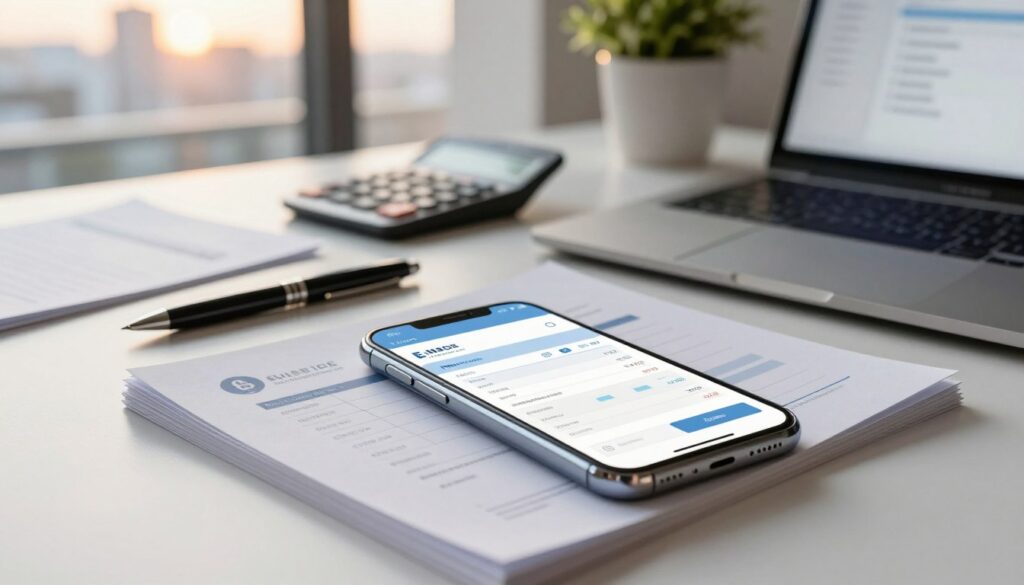
Next, the buyer uploads the complete e-invoice data to the MyInvois Portal. This official portal is used by the inland revenue board to validate submitted records.
Validation and Record Keeping
After submission the revenue board validates the e-invoice; the system then issues a unique identification number and a QR code for verification. The buyer must finish validation within the required time to remain compliant.
If errors appear, buyers have a 72-hour window to request rejection through the system before the e-invoice document becomes final. Once validated, share the self-billed invoice with the supplier and store a secure copy.
- Keep records for audits and tax purposes as required by inland revenue regulations.
- Integrate this process into daily operations so payments to agents, dealers, or other taxpayers stay documented.
Exemptions and Special Considerations
Not every payment needs a formal self-billed e-invoice; several categories are carved out by the tax rules.
Common exemptions include employment income, pension payments, and zakat. Dividend distributions by Bursa-listed companies are also excluded, which eases reporting for large listed issuers.
Payouts to betting and gaming winners remain exempt for now. Foreign suppliers who provide services to employees under specific policy conditions may also be excluded from issuing self-billed e-invoices.
Buyers should still assess purchases of goods services from individuals who are not running a business. Authorities allow concessions when issuing self-billed e-invoices for many minor payments to agents or dealers would be impractical.
- When exempt: the buyer does not need to create the e-invoice, saving time and resources.
- When unsure: consult the latest guidelines so taxpayers remain compliant and avoid mistakes.
Tip: keep clear records of why a transaction was treated as exempt. That evidence helps during audits and supports any future questions about payments or interest entries.
Integrating Middleware for Seamless Compliance

Middleware bridges accounting systems and tax portals, so teams submit accurate e-invoice records without manual re-entry.
Platforms such as JomeInvoice automate the process. They convert invoice details into the format required by the tax authority and handle automatic validation to meet LHDN rules.
Benefits of Middleware
Lower error rates and faster processing follow when middleware validates data before submission. Buyers and suppliers benefit from consistent records for each transaction and service payment.
Reduced workload means finance teams focus on exceptions, not routine entries. Automated updates keep businesses compliant as rules change.
System Compatibility
Modern middleware works with ERP systems like SAP, Sage300, and Odoo. That integration preserves existing workflows and syncs invoices, payments, and supplier details in real time.
- Automated validation ensures compliance with LHDN.
- Scalable processing for high volumes of self-billed e-invoice documents.
- Centralised logs for audits and faster resolution of mismatches.
Expert Support for Your Business Needs
Practical support is available so your company stays compliant while minimizing workflow disruption.
If you have questions about implementing a buyer-issued invoice or the mandated e-invoice system, contact us at +60143422168.
Our team provides clear, step-by-step guidance for integration. We help map your accounting fields, validate required data, and test submissions before go-live.
We keep up with LHDNM updates and can explain how rules affect reporting and deductions. Small firms and large enterprises both get tailored advice.
“Call +60143422168 to schedule a consultation and streamline your invoicing processes.”
- Hands-on help with system setup and middleware connection.
- Training for finance staff and practical compliance checklists.
- Ongoing support for error resolution and audit-ready record keeping.
Don’t let the transition slow you down — reach us at +60143422168 for fast, friendly support.
Conclusion
A reliable invoice process reduces errors and keeps payments traceable across systems.
Mastering the self-billed e-invoice routine helps businesses keep clear records for transactions and tax checks. Follow revenue board and inland revenue guidance to stay on the right side of compliance.
Buyers who must act for a supplier should record correct details, amounts, and interest so each transaction is auditable. Timely issuance keeps invoices valid for tax purposes and avoids penalties.
Use middleware and the MyInvois Portal for smooth validation, integration, and submission to the system. Stay updated with rules and call for expert support when needed to streamline your e-invoicing process.
FAQ
When must a company issue a self-billed e-invoice under the Inland Revenue Board rules?
Companies must issue a self-billed e-invoice when they act as the buyer and the transaction meets tax reporting rules that require the buyer to generate the invoice. Typical triggers include payments to agents, dealers, or payment intermediaries, certain profit distributions, and specific cross-border transactions where the buyer is responsible for tax documentation. Check the Inland Revenue Board guidance and your industry rules to confirm.
What does the self-billing framework mean for buyers and suppliers?
The framework lets the buyer prepare the invoice on behalf of the supplier for tax and reporting. It shifts responsibility for accuracy, validation, and timely submission to the buyer. Suppliers must agree in writing, and both parties must keep records for audit and VAT/GST reporting. This reduces duplicate issuing but increases the buyer’s compliance duties.
Do suppliers need to approve a buyer-issued invoice before filing?
Yes. Suppliers generally must agree in advance to buyer issuance and should receive copies for reconciliation. The buyer should also provide a clear audit trail and evidence of supplier consent. Maintaining electronic records in the MyInvois portal or approved system helps streamline this step.
Which transactions commonly require buyer-issued documentation?
Common situations include commissions and fees paid through agents, dealer trade settlements, cross-border services where reverse charge applies, and distributions treated as taxable supplies. Betting and gaming operators and their payment agents also often fall under specific reporting rules.
What essential data fields must the buyer include on a self-billed document?
Include supplier and buyer tax IDs, invoice date and serial number, description of goods or services, quantity and unit price, tax rates and amounts, total payable, payment terms, and any cross-border tax codes. Accurate transaction references and validation signatures help pass automated checks.
How should businesses validate and store these documents?
Validate invoices against sales orders, delivery records, and tax calculations before submission. Use a compliant system or middleware that supports format and schema checks, timestamping, and secure archival. Keep electronic copies for the statutory retention period and ensure quick access for audits.
Are there exemptions or special cases where buyer issuance is not required?
Yes. Some small-value transactions, specific exempt supplies, or sectors with alternate reporting rules may be excluded. Also, if the supplier cannot legally delegate invoicing or the parties haven’t agreed in writing, buyer issuance isn’t permitted. Confirm exemptions with tax advisers and the revenue board guidance.
How can middleware help with issuing documents and compliance?
Middleware automates validation, formatting, and transmission to government portals like MyInvois, reducing manual errors. It offers mapping between ERP systems, handles tax rules, ensures schema compliance, and archives records. That speeds processing and reduces audit risk.
What should I check for system compatibility when integrating middleware?
Verify API support for your ERP, support for the government portal schema, secure authentication, and real-time error handling. Confirm the middleware handles local tax rules, supports batch processing, and offers reliable logging and backups.
Where can businesses get expert help for setting up buyer-issued invoicing?
Engage tax advisers, certified accounting firms, or software vendors experienced with the Inland Revenue Board and MyInvois portal integration. Look for providers who offer implementation, validation testing, and ongoing support to keep compliance current.
What are the penalties for non-compliance when issuing buyer-generated invoices?
Penalties vary by the nature of the breach: incorrect tax reporting, late submission, or missing records can trigger fines, interest on unpaid tax, and audit adjustments. Prompt rectification, voluntary disclosure, and working with tax professionals can reduce exposure.
How often should businesses review their buyer-issued invoicing process?
Review processes at least annually and whenever tax rules, business models, or ERP systems change. Regular audits of sample transactions help catch errors early. Keep staff trained on validation steps and system updates to maintain compliance.