This short guide introduces the official export declaration used for goods leaving the country to overseas destinations, duty-free islands, or free zones. The document plays a central role during customs checks and helps exporters meet the Customs Act 1967 rules.
Accurate commercial invoice details and clear documentation speed customs clearance and cut delays. Malaysia customs requires a proper declaration form for each shipment so goods move through border controls without costly holds or extra tax issues.
Licensed agents often handle submissions, reducing errors and saving time. For local businesses, keeping neat records of every declaration protects compliance and supports smoother sales and freight processes across countries under free trade links.
Key Takeaways
- The declaration is mandatory for all goods leaving the country.
- Correct commercial invoice and documentation prevent customs holds and delays.
- Licensed agents streamline submission and customs clearance.
- Good records help exporters stay compliant with malaysia customs rules.
- Efficient handling saves time, storage fees, and protects international sales.
Understanding the K2 Form in Malaysia: Export Declaration Explained Simply
Proper export paperwork makes tracking shipments simpler for both customs and exporters. The K2 form covers goods destined for overseas ports, duty-free islands, and free zones. It acts as the primary record the malaysian customs use to confirm what leaves the country.
The export entry must include a detailed commercial invoice that lists value and descriptions. Accurate data speeds customs clearance and cuts the risk of holds at the port.
Many businesses hire a professional agent to prepare the paperwork and manage freight and documentation. Agents reduce errors and save time for busy exporters and small business owners.
| Purpose | Required Docs | Handled By | Key Benefit |
|---|---|---|---|
| Track goods leaving the country | Commercial invoice, packing list, permit | Exporter or licensed agent | Faster clearance and fewer delays |
| Record shipments to free zones | Declaration form, transport docs | Customs office review | Supports free trade and audit trail |
| Verify export value and nature | Invoice, supporting permits | Customs & agent coordination | Protects sales and tax compliance |
- Include a precise commercial invoice for each shipment.
- Use a licensed agent if documents are complex.
- Keep records to support smooth customs clearance and service continuity.
Legal Framework and Customs Requirements
A clear legal framework ensures that every shipment moves with proper oversight and the correct tax treatment. The Customs Act 1967 provides the statutory basis for declaring dutiable and non-dutiable goods. This law sets obligations for exporters, agents, and the customs department when goods cross national borders.
Customs Act provisions
The act requires a valid declaration for each shipment and mandates record keeping to support audits. Proper payment of duties and sales tax is a legal duty for every business that ships goods abroad.
The customs department reviews the export form against the commercial invoice to confirm values and descriptions. Inspectors may open freight to verify that no restricted items leave the country.
Role of the Royal Malaysian Customs Department
The Royal Malaysian Customs Department enforces laws and collects duties taxes. The royal malaysian customs authority operates nationwide to ensure compliance and to protect legitimate trade.
- Declaration compliance: every shipment must be accompanied by valid documents.
- Inspections: the malaysian customs department can inspect goods to stop illegal exports.
- Clearance process: exporters and agents must follow government orders to avoid penalties.
Preparing Your Export Documentation
Clear supporting files reduce holds and speed the customs review process. Start early and confirm that every page shows accurate details about the goods, values, and parties involved.
Essential Supporting Documents
From 2025, supporting documents will be digitized via RMCD’s MyCIEDS platform. This change makes electronic submission the norm for faster customs clearance.
- Commercial invoice: A clear description of the goods and value for correct assessment by customs.
- Packing list: Itemised contents to match shipment weight and volume.
- Bill of lading: Proof of ownership and mandatory for international freight movements.
- Permits: Obtain export permits for restricted goods such as certain electronics or chemical products.
- Agents: Experienced customs agents help ensure every form and declaration is complete.
Tip: Submit files through the official portal and keep soft copies. Proper documentation and timely electronic uploads cut processing time and reduce the chance of shipment holds or extra tax queries.
Navigating Customs Inspection Lanes
Customs assigns lanes based on risk scores to speed low-risk freight and target higher-risk consignments. The royal malaysian customs department channels every shipment into Green, Yellow, or Red lanes for efficient customs control.
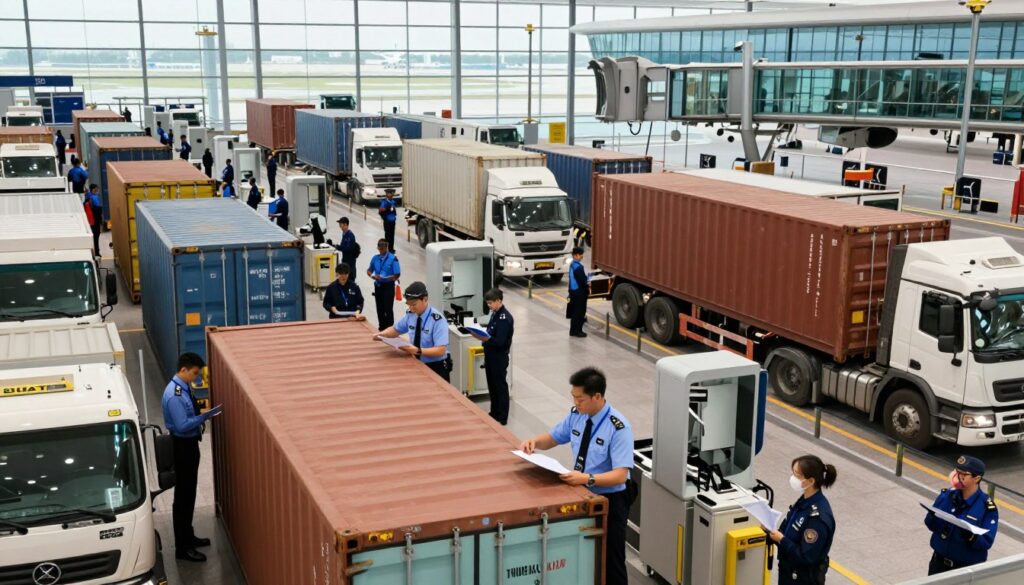
Green Lane — Automated Clearance
Green lane offers the fastest route. If all forms, the commercial invoice, and the bill match, the system grants quick approval and customs clearance.
Yellow Lane — Document Verification
Shipments placed here undergo a detailed check of paperwork. Customs agents verify the export form, permits, and invoice before release. Good documentation shortens time spent at this stage.
Red Lane — Physical Inspection
Red lane triggers a physical check of goods and the commercial invoice to confirm the description and quantity. The royal malaysian customs authority may hold cargo if the bill or other forms do not match the freight.
- Tip: Keep accurate documentation and a clean record to help agents secure faster clearance.
- Consistent compliance reduces manual inspections and lowers the risk of duty or tax queries.
Managing Duties and Sales Tax Obligations
Handling duty calculations early saves time and prevents last-minute holds at the port. For many exporters, planning tax and duty reduces surprises and keeps each shipment on schedule.
Imported goods that are taxable under SST are assessed at the border and declared with the K1 import declaration. Sales tax liabilities must be reported and paid using the SST-02 form on a bi-monthly basis. The commercial invoice is the primary document used to assess tax and duty amounts.
If goods sit in a bonded warehouse, duty payment may be deferred until sale. This option helps cash flow for businesses that store stock before distribution.
Work with a licensed agent to estimate duties and taxes before arrival. A good agent checks the invoice, calculates expected duty and sales tax, and helps arrange timely payment to the malaysian customs authority.
“Timely and accurate payment of duties and sales tax is essential for fast customs clearance and release of shipments.”
- Accurate calculations cut hold-ups during customs clearance.
- Keep invoices and records to support any duty or tax queries.
- Use bonded storage or an experienced agent to manage cash flow and compliance.
Leveraging Free Trade Zones for Export Efficiency
Storing inventory inside a bonded warehouse can free up cash by deferring sales tax and duty until goods leave the zone. This approach helps businesses manage working capital while they prepare shipments for overseas customers.
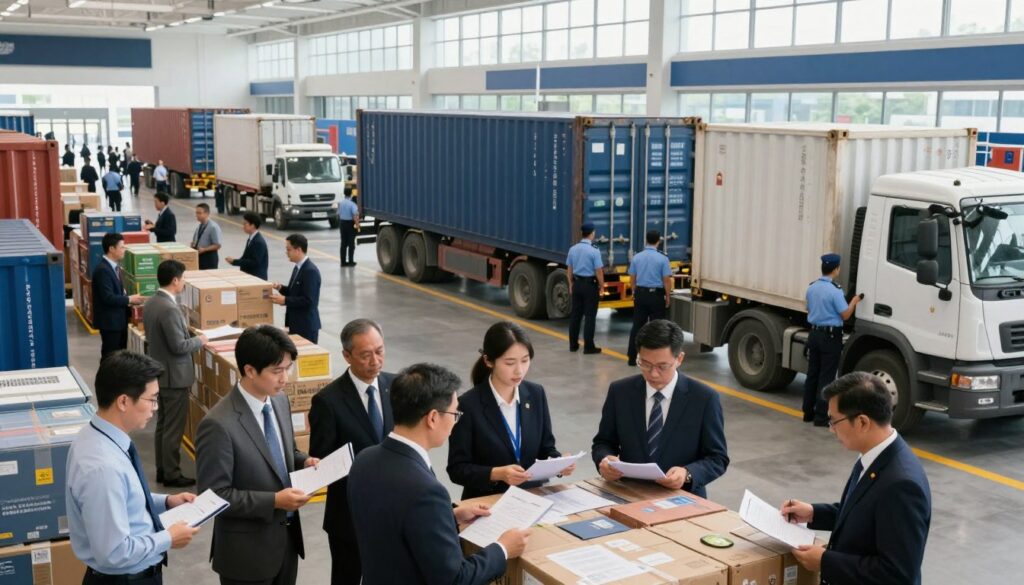
Port Klang Free Zone is Malaysia’s largest FTZ and a smart hub for sea freight consolidation and re-export. Companies use the zone to combine freight from different countries, reduce handling costs, and speed customs clearance.
Strategic Benefits of Bonded Warehousing
Bonded storage lets firms hold goods without paying import duties or sales tax until items enter the market. Customs control inside these zones tracks every shipment and keeps inventory visible for audits.
To use these facilities, exporters must follow the customs order and obtain the right permits. Proper procedures and a clear declaration or supporting form ensure smooth movement and reduce the risk of holds.
- Cash flow: Defer payment of duty and sales tax until sale or release.
- Consolidation: Combine freight to cut rates and simplify logistic flow.
- Compliance: Customs control maintains traceability while goods remain duty suspended.
Conclusion
Strong paperwork habits help exporters avoid costly delays and secure quick approval. Keep every form accurate, attach clear invoices, and track each declaration so goods move with minimal hold-ups and smooth clearance.
The royal malaysian customs department and related customs offices depend on correct records to verify shipments. Work with the right team to meet requirements and respond fast to any query.
A good routine saves time, cuts fees, and improves service for buyers. Use the free trade options wisely, follow malaysia customs rules, and focus on detail to protect your business and grow as an exporter.
FAQ
What is the K2 form used for in Malaysian export procedures?
The K2 document serves as the official export declaration submitted to the Royal Malaysian Customs Department. Exporters or their agents use it to record shipment details, commodity codes, values, and destination information so customs can clear goods for export under customs control.
Who must submit the K2 export declaration?
Exporters, freight forwarders, or licensed customs brokers typically lodge the K2. The responsible party must hold the required permits, provide accurate commercial invoices and packing lists, and ensure the declaration matches supporting documents for timely customs clearance.
When should the K2 be lodged with Malaysian Customs?
The K2 must be submitted before goods physically leave Malaysia. Timely filing prevents delays at checkpoints and helps avoid additional inspections, holds, or penalties from the customs department.
What supporting documents accompany a K2 submission?
Common attachments include the commercial invoice, packing list, bill of lading or airway bill, export permits, certificates of origin, and any product-specific licenses. These documents prove value, origin, and compliance with export controls.
How does the customs risk lane system affect K2 processing?
Declarations pass through automated lanes: green for fast electronic clearance, yellow for document checks, and red for physical inspections. Accurate K2 data and full supporting paperwork increase the chance of green-lane clearance and faster shipment release.
Are there duties or sales tax implications when filing a K2?
Exports from Malaysia are generally zero-rated for sales tax, but duty or tax may apply to transited goods or specific controlled items. Exporters must declare tax status and retain documentation to support zero-rating or duty relief claims.
Can exporters use free trade zones or bonded warehouses with a K2?
Yes. Goods held in bonded warehouses or free trade zones can be exported with a K2 and may qualify for deferment or relief from import duties and local taxes. Proper paperwork and customs approval are essential for these benefits.
What common mistakes should exporters avoid on the K2?
Avoid mismatched invoice values, incorrect HS codes, missing permits, and unclear commodity descriptions. These errors trigger yellow or red lane checks, slowing customs clearance and increasing costs for the exporter.
How long should exporters keep K2 records and related documents?
Maintain copies of K2 filings, commercial invoices, permits, and transport documents for the retention period required by the customs department—usually several years—to support audits or duty relief claims.
Where can exporters get help filing a K2 declaration?
Exporters can consult licensed customs brokers, freight forwarders, or contact the Royal Malaysian Customs Department for guidance. Many businesses use professional agents to ensure compliance and faster customs processing.